

Neighbourhood Trees Program
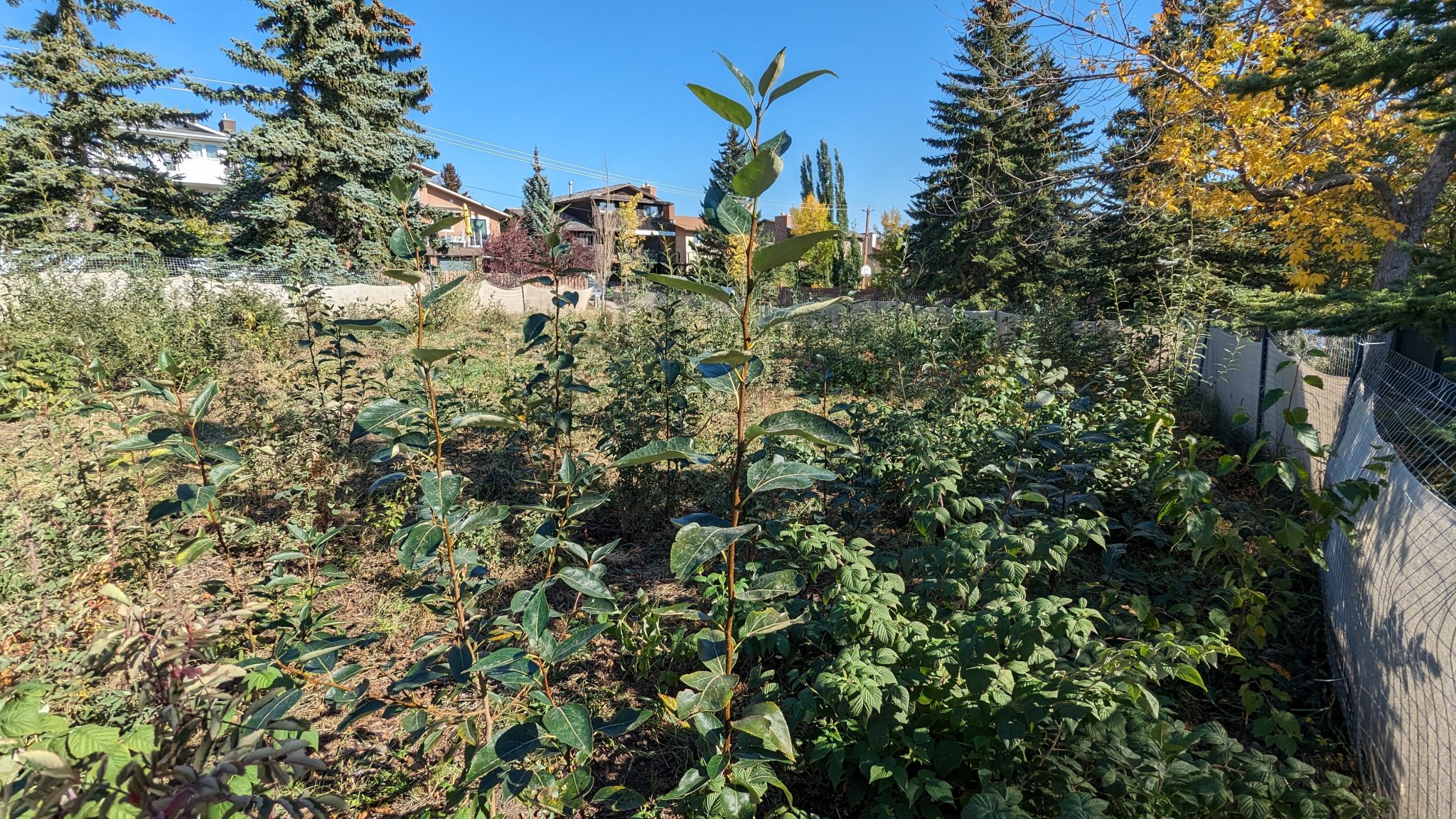
Neighbourhood Trees Program
Initiatives include residential tree planting in areas such as boulevards/medians and “road right-of-ways”, large tree succession planting and community micro forest plantings.
Residential public tree planting
When planning our planting programs, we work to identify communities with lower tree canopy cover and suitable areas to plant on both public (City) and private land.
On public land, we will find areas to plant trees such as boulevards or medians, and the “road right-of-way” that lies along the front, side edge or back of walk of a property. We also look for suitable communities to provide trees to homeowners and other private landowners to plant on their own land.
Prioritizing these areas will help ensure a more equitable distribution of trees across Calgary in the future.
Community micro forests
A micro forest is a densely planted collection of trees that grow quickly in urban areas. In time, these trees grow to become a small-scale community micro forest! We plant micro forests in Calgary though our Canopy Expansion Program - using the micro forest style of planting to kick start a small forest.
What makes a community micro forest?
To start, we prepare the soil by loosening and adding compost and mulch. Next, a diverse species of trees is densely planted in a fairly small space. We plant a different types of trees to allow Mother Nature to select the species that will grow best. This provides the greatest chance of growing a successful, biodiverse community micro forest.
As the forest grows, it will provide many benefits. It will become a biodiverse habitat where a variety of plants and animals can live, sequester carbon which helps mitigate climate change and will offer other climate-positive benefits including reduced stormwater runoff and improved air quality. It will also offer shade on a sunny day and be a beautiful place for the community to enjoy.
Interested? If you are interested in volunteering to help plant a community micro forest or if you have an idea for another community micro forest location, please email us at yyctrees@calgary.ca
Large tree succession planting
Urban Forestry's Life Cycle Replacement Program focuses on public safety, risk mitigation and the overall health of the urban forest. As trees age, they may become more susceptible to pests, disease, or potential structural issues. This program identifies and replaces these trees using a consistent, citywide approach that ensures every community is supported equitably.
Removals are prioritized on a risk-based model, meaning trees are selected utilizing a strict criteria to authorize removal, this includes a thorough evaluation of their health, condition, structure, potential infrastructure concerns and the individual trees suitable useful life expectancy. If a tree no longer provides a safe or sustainable benefit to the community, it may be prioritized for removal.
When it’s time to replant, we follow the principle of “right tree, right location.” We aim to plant a replacement tree close to its original location but in some cases, it is not feasible due to changing conditions both under and above ground that may constrain our ability to plant a new tree. In those instances, we replant within the same community to ensure we are maintaining canopy.
For more information, please call 311.