

Bats
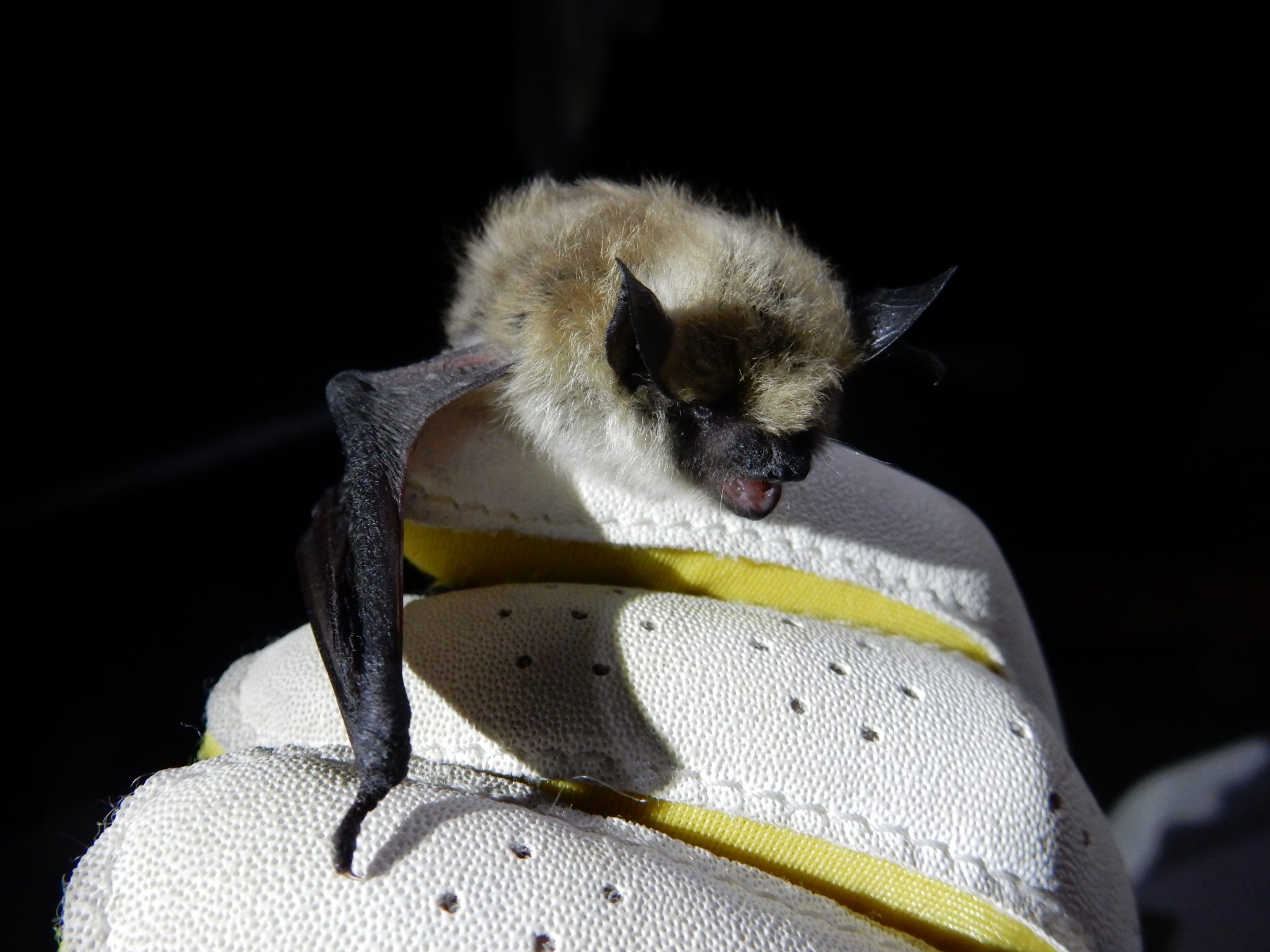
Bats in Calgary
Bats are a natural part of Calgary’s environment and play an important role in keeping ecosystems healthy. They help control insect populations and support biodiversity across the city.
Why we need bats
Bats are essential for controlling insect populations. All bats in Alberta eat insects, including mosquitoes, moths, beetles, and flies. A single bat can eat thousands of insects in one night, sometimes up to half its body weight. By reducing insect populations, bats help limit the need for pesticides and support a healthy, balanced ecosystem.
Bats in Alberta and Calgary
Alberta is home to 9 bat species:
- Big brown bat (Eptesicus fuscus)
- Little brown bat (Myotis lucifugus)
- Silver-haired bat (Lasionycteris noctivagans)
- Red bat (Lasiurus borealis)
- Hoary Bat (Lasiurus cinereus)
- Long-eared bat (Myotis evotis)
- Northern myotis (Myotis septentrionalis)
- Western small-footed bat (Myotis ciliolabrum)
- Long-legged bat (Myotis volans).
Seven of these can be found in Calgary during the summer months – all except for the northern myotis and western small-footed bat.
Bats depend on access to open water for drinking and are typically found within two kilometres of rivers, ponds, and wetlands. In urban areas, they often roost in trees, buildings, and under bridges.
Sadly, two species in Alberta—the little brown bat and the northern myotis—are currently listed as endangered. Several others are of conservation concern. Learn how you can help.
Bats – our misunderstood furry friends
Bats are often portrayed in popular culture as frightening, but we like to say that while bats may be hairy, they’re not actually scary!
A few fun facts about bats:
- Bats are social and intelligent mammals with complex behaviours. They live in groups called maternity colonies and form long-term social bonds.
- Mothers invest significant time in raising their young, nursing and protecting them for months. Colonies often cluster together to stay warm, and individuals communicate using vocalizations. Some species even have distinct “dialects” within their colonies.
- Bats also have strong memories and can learn and remember complex routes. Despite their small size, they are long-lived animals, with some individuals living for decades.
- Bats are not rodents but belong to their own group of mammals called Chiroptera, meaning “hand wing.” They are the only mammals capable of true flight.
- Bats are not blind: In addition to having functional eyesight, they use echolocation to navigate and hunt in the dark. By emitting high-frequency sounds and listening for returning echoes, they can locate insects with great precision. As they close in on prey, their calls become more rapid in what is known as a “feeding buzz.”
- In Alberta, bats reproduce slowly: Most species have only one pup each year, which makes population recovery more difficult.
Threats to bats
Bat populations in Alberta are facing several challenges.
Habitat loss is a major concern. As urban development expands, natural roosting sites such as old trees and undisturbed river valleys are reduced. As a result, bats increasingly rely on human-made structures.
White-nose syndrome is another serious threat. This fungal disease affects hibernating bats and disrupts their natural cycles, causing them to use up critical energy reserves before spring.
Additional pressures include declining insect populations, climate change, and impacts from wind turbines.
How you can help support our bat populations
There are many simple ways to support bats in your yard or neighbourhood. Reducing or eliminating pesticide use helps ensure there are enough insects for bats to feed on. Planting native trees, shrubs and flowers—especially near water—provides habitat for insects and safe foraging areas for bats.
Keeping outdoor spaces darker at night supports natural bat behaviour. Leaving fallen leaves and plant material until spring allows insect larvae to overwinter, which helps sustain the food sources bats rely on.
It is also important to remove hazards. Open buckets of water and sticky traps can harm bats and should be avoided. If it is safe to do so, retaining old or partially decaying trees can provide valuable roosting habitat.
Bat houses may offer additional habitat, but they must be carefully designed and properly placed. Poorly designed or incorrectly positioned boxes can overheat and harm young bats.

Living safely with bats
Bats are not aggressive, but they should never be handled (even one that appears to be injured or dead). Like any wild animal, a bat may bite if it feels threatened. While it’s true that in Alberta bats are the only wild species that maintain the rabies virus, the prevalence of rabies among bats in Alberta is very low. When left alone and kept out of human living spaces, bats are harmless and provide many benefits for human communities and the ecosystems on which we depend.
If you encounter a bat that is injured, flying during the winter or appears unable to fly, keep your distance and seek professional assistance by contacting:
Calgary Wildlife Rehabilitation Society (CWRS)
403-214-1312
calgarywildlife.org
Alberta Institute for Wildlife Conservation (AIWC)
403-946-2361
aiwc.ca