

Affordable Housing
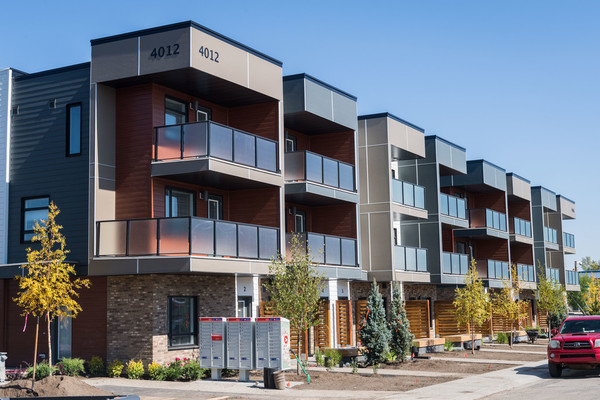
Supporting Calgarians with Affordable Housing Affordable housing
If you are a Calgarian and you require affordable housing, or if you are already living in affordable housing, there are resources available. Find out how to apply, and learn about other resources available to you.
Calgary has more than 60 affordable housing partners working to provide safe and stable homes for individuals and families.
What is non-market housing?
The City's definition of non-market housing refers to housing that is provided for income groups not served by the private market. This type of housing is typically made affordable through public and/or non-profit ownership of housing units, or through rent supplements that allow low-income households to access housing in the private market.
Sometimes “non-market housing” is also referred to as “affordable housing” and they are similar but not quite the same. Affordable housing has a very specific definition (see below) whereas non-market housing is broadly any housing below market rates.
What is Affordable Housing?
The City of Calgary defines a household in need of affordable housing if it earns less than 65 per cent of the median income 2 and spends 30 per cent or more of its before tax income on shelter costs.
According to 2021 census data, median income was $98,000, 65 per cent of median income is $63,700.
There are two types of affordable housing offered by The City of Calgary:
- Near market or (or low end of market) housing which includes rentals offered at rates approximately 10% below market rates.
- Subsidized housing which includes several different program types including rent supplements for private landlord units.
Research and trends
Research on Calgary’s housing system and why research is important to what we do.
Are you looking for non-market and affordable housing?
-
2018 Affordable housing guide
This guide is intended for anyone who is looking for emergency shelters, short-term and transitional housing, non-market and affordable housing in Calgary.
Please note: It is not a full list of available housing providers.
-
Government of Alberta - Additional resources
The Government of Alberta has additional resources available. Learn more through their online portal.
-
Call 211
211 is a free, confidential and multilingual service that connects to Government of Alberta programs and services. Call 211 or connect online for more information.
The City of Calgary's affordable housing providers
-
Calgary Housing Company (CHC)
Calgary's largest property manager for affordable housing is Calgary Housing Company (CHC). CHC manages over 10,000 affordable housing units with more than 25,000 tenants living in a variety of mixed income housing options.
CHC provides safe and affordable housing solutions for low- and moderate- income Calgarians in need of non-market rental housing. CHC ensures that new affordable housing developments are financially sustainable while providing an inclusionary approach to housing.
-
Attainable Homes Calgary (AHC)
Attainable Homes Calgary (AHC) provides non-market housing options for Calgary's workforce. Established in 2009, AHC is an independent, non-profit organization owned by The City of Calgary. AHC’s mandate is to create and increase the supply of non-market, affordable housing on development-ready land in Calgary, on behalf of The City and Calgarians.
Frequently Asked Questions
What is the difference between non-market/affordable housing and housing affordability?
Non-market housing refers to housing that is provided for income groups not served by the private market. This type of housing is typically made affordable through public and/or non-profit ownership of housing units, or through rent supplements that allow low-income households to access housing in the private market. Approximately one in five households fall under the threshold for needing non-market housing. These households cannot afford to rent or buy housing at market prices.
Housing affordability is about the overall market. It is when there is a balanced housing market, where the demand from buyers is equal to the available homes from sellers, and people or households have access to a variety of housing options where they do not have to spend more than 30% of their income on housing. Put another way It means a household can pay for their housing costs within their income level without having to make significant sacrifices in other basic needs.
Who lives in non-market and affordable housing?
Non-market and affordable housing serve people in varying circumstances. In a city as diverse as Calgary, it's important to have a wide range of housing options for people at all income levels and stages in life.
Households in need of, or living in affordable housing include working professionals and families who earn less than estimated $63,700/year (as of the 2021 census), as well as people who require subsidized housing for a variety of reasons, such as age and disability.
Why is The City supporting the development of more non-market and affordable housing?
In Calgary, nearly one in five Calgary households are struggling with housing costs and 42,000 households are at risk of becoming homeless due to spending more than half of their gross income on housing costs.
In 2025 only 3.5 percent of all housing stock in Calgary is non-market rental.
The City's goal is to increase the supply of non-market and affordable housing to ensure people at all income levels can live and work in our city.
How is The City addressing the ongoing need for non-market and affordable housing in Calgary?
City Council approved Home is Here: The City of Calgary's Housing Strategy (2024-2030), which delivers a variety of actions that will work together to address the complexity of housing and housing affordability.
Housing is ultimately about positive outcomes for people and is foundational to community and economic prosperity. The Housing Strategy positions The City to be more intentional in supporting individual and community wellbeing and improving the housing outcomes of Indigenous people and equity-deserving populations. This will be done by incentivizing the right type of supply to meet their respective needs and by reducing barriers to access housing.
Who manages The City’s affordable housing units?
Calgary Housing (CH) operates City-owned affordable housing. CH serves more than 25,000 Calgarians in more than 10,000 households and provides a variety of mixed-income housing options and has operated affordable housing for more than 40 years.
How do people get into non-market and affordable housing?
Many property managers in the non-market and affordable housing sector use qualifying criteria to select renters, such as household income. Households on the Calgary Housing waiting list are prioritized according to The Government of Alberta's Social Housing Accommodation Regulations (SHAR), which set out a scoring system according to need.
How do non-market and affordable housing benefit the community?
At its most fundamental level, non-market and affordable housing is about people. Access to safe and stable housing helps create inclusive communities and adds to the overall health, prosperity and safety of our city.
People in non-market and affordable housing have greater chances to find and keep jobs, to learn and build skills, and be active participants in their communities.
Non-market and affordable housing also help boost the local economy by increasing the purchasing power of residents and by attracting investment and employers to Calgary with the promise of a stable workforce.
Keeping vulnerable residents off the streets also helps to reduce demand and pressure on emergency services, hospitals and correction facilities. Providing housing for one homeless person has been shown to save taxpayers $34,000 annually.
How does non-market housing support the economy?
Developing, redeveloping, and maintaining non-market housing creates jobs and supports Alberta’s economic resiliency. Every million dollars invested in housing grows the economy by $1.4 million and generates up to 13 indirect and direct jobs.
Further, investments in housing reduces demand for and pressure on emergency services, hospitals, and correctional facilities. Providing housing for one person experiencing homelessness has been shown to save taxpayers $34,000 annually. The availability of non-market housing for people at lower income levels also supports employers and the attraction of businesses and investment in Calgary.
How are non-market and affordable housing sites chosen?
Non-market and affordable housing locations are chosen based on certain criteria such as proximity to amenities including schools, grocery stores and transit.
Council has approved non-market housing going into every Calgary community. Currently, less than 50 per cent of Calgary communities have non-market housing.
What does it cost to live in affordable housing?
Rents in City-owned affordable housing developments are set according to a mixed income model. This helps maintain the financial sustainability of the building and provides an inclusionary approach to housing where tenants of mixed financial means are blended together.
Myths about Non-market and Affordable Housing
Myth: My property value will go down if affordable housing is built in my neighbourhood
Reality: More than 100 studies conducted in the US and Canada during the past 30 years show no evidence that property values are impacted by affordable housing developments. The City of Calgary does not consider the proximity of affordable housing in property tax assessments.
Myth: Crime in my neighbourhood will increase
Reality: Canadian studies have similar findings as research conducted in the US and other countries that crime rates in the neighbourhood are unaffected by the existence of the supportive housing buildings.
Myth: New residents won’t fit into the neighbourhood
Reality: Often, the future occupants of new affordable housing already live in or near the neighbourhood. They are people sharing housing with other family members or friends, or struggling to pay market rent by giving up meals or having to walk because they cannot afford transit fares. Complete communities provide housing opportunities for all.
Myth: Affordable housing design won’t fit with the neighbourhood / units will be an eyesore
Reality: Affordable housing must comply with the same building restrictions and design standards as market-rate housing, which includes fitting the character of the neighbourhood.