

The Bearspaw Reservoir
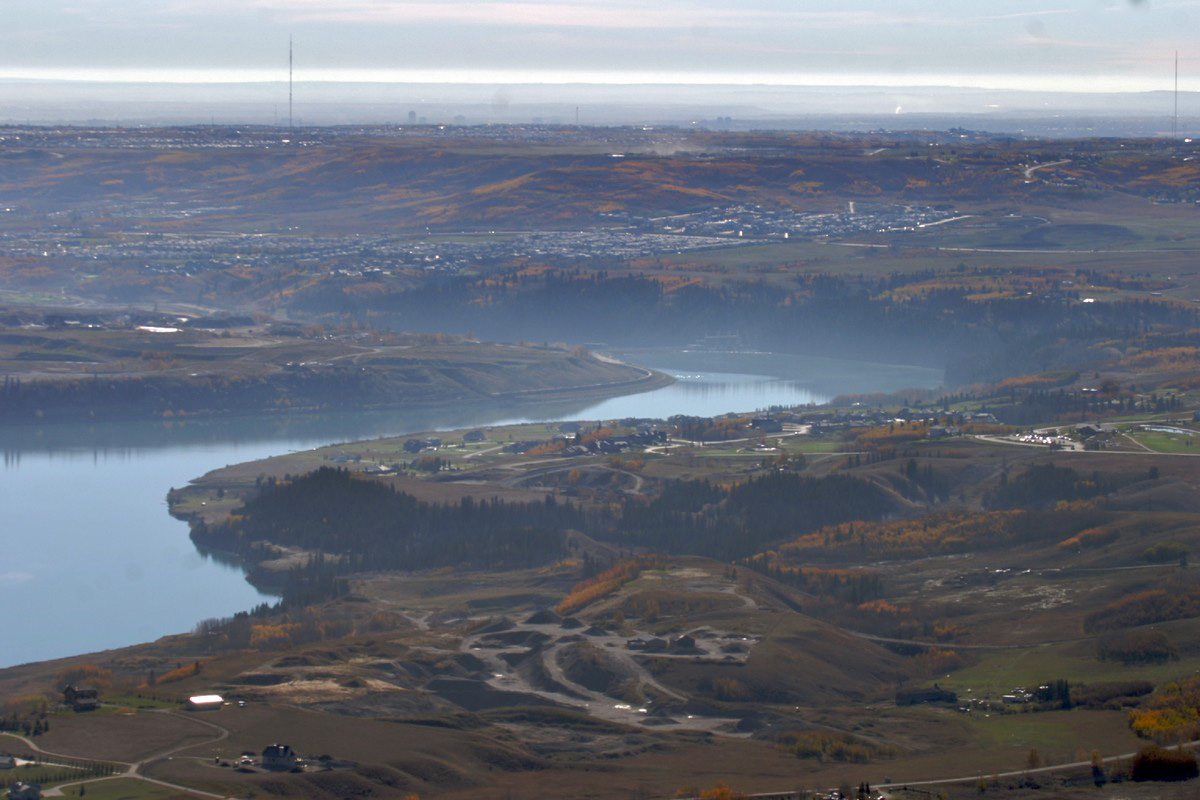
The Bearspaw Reservoir
The Bearspaw Reservoir, a segment of the Bow River adjacent to northwest Calgary, is a vital water source for Calgary and surrounding communities.
The reservoir plays a critical role in providing high-quality source water to the nearby water treatment plant, while also serving as an essential part of our region’s hydroelectric infrastructure.
Bearspaw Reservoir spring update
As spring weather brings more people outdoors, we want to remind visitors to the Bearspaw Reservoir and surrounding areas that access to and recreation on the reservoir is strongly discouraged, and access to the reservoir within 8 km upstream of the dam trespasses on private property belonging to the dam operator.
There is no on-water emergency response on the reservoir, putting life safety of reservoir users at risk. The Bearspaw Reservoir is dangerous for both experienced and inexperienced watercraft users because of strong currents, fluctuating water levels and steep embankments.
New safety signage (see below) will be added by June 2026 in Haskayne Legacy Park to help visitors stay safe near the reservoir.

The Bearspaw Reservoir Management Plan
The Bearspaw Trilateral Task Force is developing a long-term Management and Implementation Plan focused on balancing recreation on or near the Bearspaw Reservoir with the protection of water quality and management of public safety needs as guided by the June 2019 Consensus Report.
The Management Plan will address permitted recreation activities, access points, vessel management, emergency response, enforcement, environmental health, and all other matters required to ensure a safe, responsible, and coordinated approach to manage recreation on the reservoir.
Phase 1 What We Heard Report now available
Thank you to everyone who participated in Phase 1 engagement for the Bearspaw Reservoir Management Plan from June 18 to July 26, 2026. During Phase 1, we heard from residents, reservoir users, interested parties and organizations through an online survey, a public information session and focus group discussions.
The Phase 1 What We Heard Report is now available and reports back on the feedback, perspectives and priorities shared during engagement. This input will help inform the draft Bearspaw Reservoir Management Plan as the project moves into Phase 2.
Read the What We Heard Report on the project website.
Next steps
Phase 2 engagement is planned for later in 2026. During this phase, we will return to the community to share and gather feedback on draft directions for the Bearspaw Reservoir Management Plan.
More information about Phase 2 engagement opportunities will be shared as details are confirmed.
About the Bearspaw Reservoir
The Bearspaw Reservoir is solely located outside the boundaries of The City of Calgary and The City does not have authority to regulate activities on it. The City's priorities for the reservoir are:
- Manage risks to public life safety as the reservoir is dangerous for both experienced and inexperienced users because of strong currents, fluctuating water levels and steep embankment; on-water emergency response is not available.
- Store an adequate supply of high-quality source water for the water treatment plant.
- Protect critical infrastructure that is essential for our water and electricity supplies.
- Reduce the impact of high river flows and sustain environmental health.
The City is working with Rocky View County and TransAlta Corporation, the partners with jurisdictional responsibility for Bearspaw Reservoir, as part of a Trilateral Task Force to develop a strategy to provide guidance on source water protection, public safety, development adjacent to the reservoir and regulations for recreational activities.
Critical infrastructure on the Bearspaw Reservoir
The Bearspaw Reservoir is home to critical infrastructure that ensures the reliability of Calgary’s water and electricity supply:
The Bearspaw Water Treatment Plant and water intake structures
As one of Calgary’s water treatment facilities, the Bearspaw Water Treatment Plant is responsible for the delivery of high-quality, safe drinking water to Calgarians and regional customers. It supplies 60 per cent of Calgary's drinking water.
Several intake points exist in proximity to the reservoir and supply water to the Bearspaw Treatment Plant.
Preventing the degradation and contamination of water entering these intakes is an important part of protecting Calgary’s water supply.
The Bearspaw Dam
Owned and operated by TransAlta Corporation, the Bearspaw Dam generates hydroelectric power for Calgary and its surrounding region.
What are the risks of using the Bearspaw Reservoir?
Public access to the Bearspaw Reservoir poses life safety risks to the public.
The reservoir is dangerous for both experienced and inexperienced watercraft users because of strong currents, fluctuating water levels and steep embankments. Families and children who access the reservoir may be unfamiliar with the significant life safety dangers of shifting water conditions.
Water levels in the reservoir change by more than two metres throughout the day due to dam operations, causing sudden and unpredictable shifts in current speed, flow direction, and depth – posing significant life safety risks to unprepared users.
On-water emergency response is not available on the Bearspaw Reservoir, putting the life safety of reservoir users at risk.
Bearspaw Reservoir is within Rocky View County, not The City of Calgary, and the Rocky View County Fire Department does not have the resources for on-water rescue. The Calgary Fire Department does not provide on-water rescue services for the reservoir, as it is located in Rocky View County.
Recreational use of the Bearspaw Reservoir could lead to contamination of the largest source of Calgary’s drinking water.
The Bearspaw Reservoir supplies 60 per cent of Calgary’s drinking water, and safe, clean drinking water is a critical service that The City provides to Calgarians and surrounding communities. Recreational activities on the reservoir risk contaminating the largest source of Calgary’s drinking water, including contamination from human waste, microplastics, sunscreen, invasive species and erosion from increased usership.
Boating (both motorized and non-motorized) and swimming are strongly discouraged as there are significant life safety dangers and risk of water contamination.
The City's Source Water Protection Policy commits to delivering safe, clean, high quality drinking water to our city and regional customers through proactive stewardship and management of regional source watersheds and riparian areas within Calgary
Source water protection not only protects water quality for Calgarians and our regional customers, but also for nearly 2 million people in communities downstream of the city.
The Bearspaw Trilateral Task Force
The Bearspaw Trilateral Task Force is a partnership between The City of Calgary, Rocky View County, and TransAlta to address emerging concerns and develop a long-term management plan for the reservoir. The task force is focused on:
- Developing a strategy to provide guidance on source water protection, public safety, development adjacent to the reservoir and regulations for recreational activities.
- Conducting public engagement to gather input from residents, landowners and community partners.
- Enhancing coordination among jurisdictional partners to ensure effective management of the reservoir.
- Exploring policy and enforcement options to support long-term sustainability and safety within the reservoir.
Task Force Scope
While exploring management and governance strategies to protect the Bearspaw Reservoir, the 2019 Consensus Report identified four key principles with which to guide the former and future work of the Task Force.
These principles of reservoir management are as follows:
- Collaborative Management: A comprehensive, integrated, collaborative approach is needed to effectively manage the Bearspaw Reservoir.
- Long-Term Sustainability: Decisions shall be proactive and forward-thinking, to avoid incremental impacts resulting in risks to public health and aquatic environments for future generations.
- Precautionary Approach: Where scientific uncertainty on the risk of harm from activities or land uses persist, a precautionary approach to risk management shall be applied.
- Accommodate Low Risk Users: Low risk uses that will not diminish source water quality will be examined in a balanced manner [where possible], in recognition of environmental, recreational, amenity, and hydropower values.
These principles coincide with the Task Force’s primary goals of water protection, public safety, and preserving hydroelectric electricity generation.
Jurisdictional complexities
Bearspaw Reservoir and its surrounding lands are jurisdictionally complex. Rights and responsibilities for the reservoir are split between five major parties:
- The City of Calgary: Owns and operates the Haskayne and Bearspaw Legacy Parks adjacent to the reservoir, with City jurisdiction ending along the northeastern bank.
- Rocky View County: Primary municipality surrounding much of the reservoir, responsible for land-use planning, bylaw enforcement, and emergency response within the jurisdiction.
- TransAlta: Owns and operates the Bearspaw Dam and immediate surrounding lands, as well as the bed and shoreline of the reservoir through a legal agreement with the Government of Alberta.
- Government of Alberta: Governs the use, protection, and stewardship of water resources in the province via provincial strategies and acts.
- Government of Canada: Governs the use of navigable waterways in Canada, as well as legislates water and watershed protection for the country.
The City’s priorities for the reservoir include:
- Managing risks to public safety associated with unauthorized access, emergency response limitations, and water hazards.
- Storing an adequate supply of high-quality source water for the water treatment plant.
- Protecting critical infrastructure that is essential for water and electricity supplies.
- Reducing the impact of high river flows and sustaining environmental health.
Frequently asked questions
What activities are prohibited on Bearspaw Reservoir?
The City is not the regulatory authority for Bearspaw Reservoir.
Shore access requires the permission of the owners of the shore land. Boating, both motorized and non-motorized, and swimming are strongly discouraged on the Bearspaw Reservoir as it is dangerous for both experienced and inexperienced watercraft users because of strong currents, fluctuating water levels and steep embankments.
Water levels in the reservoir change by more than two metres throughout the day due to dam operations, causing sudden and unpredictable shifts in current speed, flow direction, and depth – posing significant life safety risks to unprepared users.
On-water emergency response is not available on the Bearspaw Reservoir, putting the life safety of reservoir users at risk.
Why is there no emergency response available for Bearspaw Reservoir?
Bearspaw Reservoir is within Rocky View County, not The City of Calgary, and the Rocky View County Fire Department does not have the resources for on-water rescue.
The Calgary Fire Department does not provide on-water rescue services for the reservoir, as it is located in Rocky View County.
Who has jurisdiction over Bearspaw Reservoir?
Bearspaw Reservoir and surrounding lands are jurisdictionally complex.
- TransAlta – Owner of the Bearspaw Dam and the land surrounding the reservoir within the City of Calgary, and operator of the reservoir; overseeing hydroelectric power generation and shoreline management.
- Rocky View County – The municipality in which the reservoir is located.
- Provincial and Federal Governments – Oversees water quality regulations, environmental protection, and navigation laws via various agencies. The Province owns the bed and shore of the reservoir and all water within the reservoir.
Boating is allowed on Glenmore Reservoir, so why not on Bearspaw Reservoir?
The Bearspaw Reservoir does not have any of the public safety and water contamination controls that exist on the Glenmore Reservoir. Glenmore Reservoir lies fully within The City of Calgary’s jurisdiction, which allows The City to regulate activities on the reservoir and all lands surrounding the reservoir in a way that mitigates risks. In addition, the Calgary Fire Department is able to perform on-water rescues on Glenmore Reservoir, further mitigating risks to the public. This is not possible on Bearspaw Reservoir.
Non-motorized boating is allowed in some areas of the Glenmore Reservoir, is highly regulated and not allowed in proximity to source water intakes. There are buoys to mark no-entry zones and keep recreational users away from dangerous areas, while clear signage is in place to warn users of deep-water areas, strong currents, restricted areas and fluctuating water levels.
Additionally, contamination safeguards exist on Glenmore Reservoir that do not exist on Bearspaw Reservoir. Safeguards include a boat patrol and a Bylaw that governs what kinds of boats and how many can be on the Reservoir.
Will recreational activities be encouraged in the future?
The Bearspaw Trilateral Task Force, a partnership between The City of Calgary, Rocky View County, and TransAlta, is developing a long-term management plan for the reservoir, including the potential for planned and managed recreational activity.
Ensuring public safety through an emergency response plan and managing the impact of recreational activity on water quality are being considered as part of this work.
Why is TransAlta’s assessment of the risks on the Bearspaw Reservoir important?
- TransAlta Corporation has owned and operated the Bearspaw Dam and Reservoir for over 70 years.
- They are the experts when it comes to the conditions of the reservoir and the dangers posed by the infrastructure.
- There have been historical public safety incidents in and around other hydro-electric reservoirs, one as recently as 2023.
- TransAlta’s information is the best information available about the conditions of the Bearspaw Reservoir. If they are saying it poses life safety risks, The City needs to take these warnings into consideration.
Additional information
For more information on Bearspaw Reservoir and our critical water and hydroelectric infrastructure, please visit: