

Mosquitoes
What to Expect This Fall
Mosquito activity typically continues into September. However, cooler overnight temperatures help reduce mosquito populations, and mosquito activity is expected to continue declining as the season progresses.
Where to find them
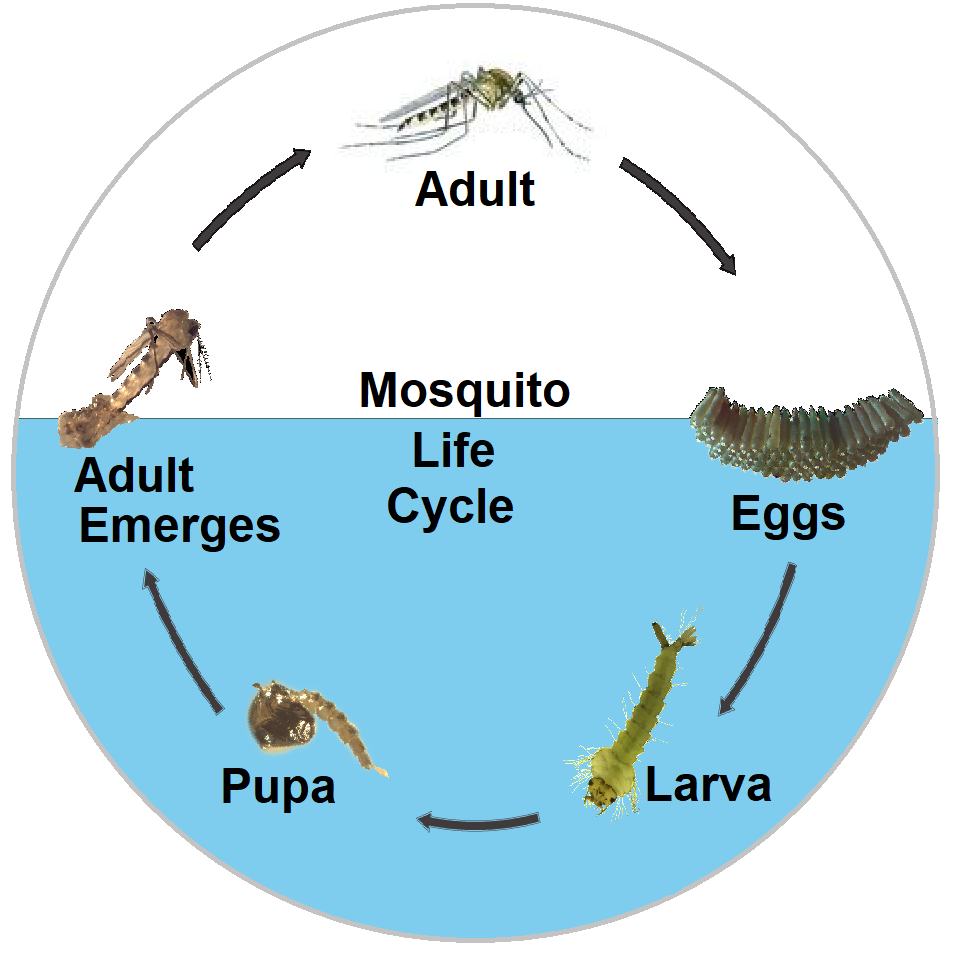
Mosquitoes are a seasonal insect in Calgary, whose numbers are generally low in spring and peak in mid-summer. The majority of a mosquito’s lifecycle takes place in water, demonstrated in the below graphic. In Calgary, most mosquito species breed in temporary pools, which dry up a few to several times per year (e.g. snowmelt pools, ditches, irrigation pools, puddles, small ponds with stagnant water, etc.). Larger, more permanent bodies of water such as man-made lakes and storm water ponds are not a significant source for mosquitoes. Some species also breed in containers like bird baths, rain barrels, and tires.
Their role in our ecosystem
Mosquitoes can be a nuisance, but they also play a valuable role in our ecosystem. Mosquitoes support biodiversity in Calgary by acting as a food source for other insects and animals, particularly those that live in water (aquatic organisms). Mosquito larvae in water are eaten by fish, like minnows, dragonfly larvae and other aquatic organisms. Outside of the water, adult mosquitoes may be eaten by adult dragonflies, birds and bats.
Mosquitoes are also pollinators that transfer pollen when they move from flower to flower in search of nectar. Male mosquitoes rely on nectar as a food source. Female mosquitoes use blood as a food source to produce their eggs but also feed on nectar.
The City’s role
We trap mosquitoes to estimate numbers and plan treatment. Historical and seasonal data is used to plan the best timing of control methods. When populations are high enough, we do aerial or ground applications of a product that specifically controls mosquito larvae. This typically happens in the late spring or early summer after a large rainfall event. Monitoring starts in early spring, and we monitor and apply further treatments, as necessary.
For mosquito control, we use a bacterial product that’s only activated when eaten by a mosquito or closely related flies. This product is registered and regulated by the Federal Pest Management Regulatory Agency.
Reducing mosquitoes in your yard
- Remove any shallow standing water on your property, regularly drain and/or cover any containers which collect rainwater like bird baths, empty flowerpots, rain barrels and eavestroughs.
- Keep lawns shorter and shrub beds tidy as mosquitoes use these areas as places to hide during hot weather.
- Mosquitoes are most active at dusk and dawn, so try to limit your outdoor activities during these times.
