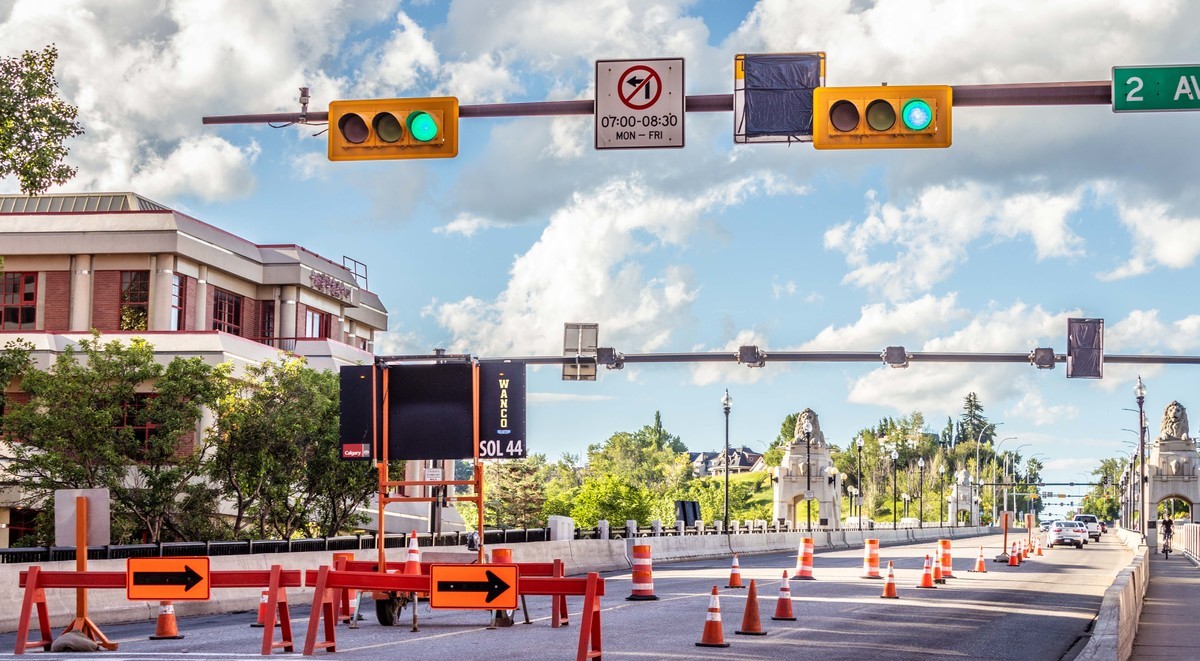
Plan Your Trip - Navigating Calgary traffic and detours
Planning ahead helps replace surprise and frustration with clarity and confidence — because traffic impacts are anticipated, coordinated and actively managed to make daily travel easier for Calgarians.
Traffic and detours are part of building and maintaining a growing city. The easiest trip today is often the one you plan for. This page helps you make a smart, everyday travel decision before peak impacts begin — so you can leave with clarity and confidence instead of reacting once you’re already delayed.
See today's major disruptions
Check one place first. This gives you a quick view of what’s happening across roads, transit, pathways and events today so you can decide how to travel before you leave.
-
See road repairs, closures, detours or accidents across The City that could affect your drive.
-
See any Transit impacts like delays or interruptions in your journey.
-
View short and long-term pathway closures around The City.
-
See traffic congestion and road closures in Calgary's downtown.
-
View live traffic camera images of current road conditions on major routes and key intersections.
-
Estimated based on real-time congestion on Calgary's busiest routes.
-
Current and planned closures and detours for parades, marathons and festivals.
Other actions you can take for a quick trip:
- If congestion is high, travel earlier or later when possible
- If downtown access is tight, consider transit or active modes
- If you must drive, use Waze for routing and check cameras before leaving
- Use the our traffic advisory radio station (107.9FM) or the YYC Transport X account (when save to do so) for real-time updates on the go
These small choices reduce peak stress on the network and help daily travel run more smoothly.
Choose how you're travelling
Best next steps for your trip, by mode:
Driving
Driving
Best next steps:
- Before you leave, check closures, detours and incidents along your route uing the traffic map
- If you’re leaving soon, confirm conditions by viewing live traffic cameras
- If your route changes, download the Waze app for detour directions
If driving doesn’t look smooth today, consider transit or active modes to avoid peak stress on the network.
Transit
Transit
Best next steps:
- For delays, reroutes and service impacts, check transit service updates
- Plan a trip using real‑time schedules
Transit can be the easiest option during downtown congestion or major events.
Biking
Biking
Best next steps:
- Check pathway and bikeway conditions first
- Look for pathway closures and detours before you go
- Enjoy an easy ride as you discover the area on an e‑Scooter or e‑Bike
Walking or wheeling
Walking or wheeling
Best next steps:
- Check for sidewalk and pathway closures and updates that may affect your route
- If you’re travelling downtown, check today’s major disruptions before leaving
Accessible travel
Accessible travel
Best next steps:
- Check pathway closures and detours early so you can avoid last‑minute detours
- Check transit accessibility information if you’re taking transit
If you need low‑barrier routes, step‑free connections or construction‑aware pedestrian navigation, planning ahead is especially important — conditions can change with active work zones.
Report a traffic problem
-
Speeding, unsafe driving near schools or playgrounds and intersection safety issues.
-
Traffic signals, signs, crosswalks and road conditions.
How we manage traffic
To minimize delays and keep people safe, The City coordinates construction, utilities, events and detours across Calgary and:
- aligns major work that impacts roadways (City projects, developers, utilities)
- creates safe detour plans for drivers, cyclists and pedestrians
- schedules work to reduce disruption when possible (overnight or weekends)
- monitors roads in real time using cameras and adaptive traffic signals
- responds quickly to incidents and changing conditions
The Traffic Management Centre monitors conditions, responds to incidents and adjusts traffic signals in real time to keep the city moving.
Traffic Talk is a video series that shows how that work happens — during construction season, snow events, major events and unexpected incidents. New episodes are added throughout the year.
How Waze helps drivers get around
If you’re driving, Waze can help you plan your daily routes in Calgary.
In 2021, The City of Calgary partnered with Waze to help Calgarians navigate the roads in every quadrant of our city. Closures and detours are updated in the app so you can find the fastest route and avoid delays.
Waze works on smartphones and tablets on Apple and Android devices that have GPS support. When users report a stalled car, accident or lane closure, the TMC will respond with real-time to adjust traffic signals and inform motorists who can then change their route and avoid the delay.
Parking during construction or major events
When streets change for construction, detours, major projects or special events, parking rules may change too. Temporary no‑parking zones help keep detours working, protect work zones, support emergency access and reduce congestion.
Calgary Parking uses an education‑first approach to help drivers understand what’s changing, why it’s needed and how long it applies.
Frequently asked questions
Why do traffic, detours and parking rules change so often in Calgary?
Calgary is a growing city with a short construction season. Road work, utility upgrades, events, emergencies and weather can all affect how people move around the city. These changes are planned, coordinated and actively managed to keep people safe and keep the city moving while essential work happens.
How can I see what’s happening across the city before I leave?
Start with the live planning tools. They show what’s happening today—across roads, transit, pathways and major events—so you can plan ahead instead of reacting once you’re delayed. Checking conditions before you go is the easiest way to avoid surprises and travel with confidence.
Why don’t detours or restrictions always match what I used yesterday?
Conditions can change daily—or even hourly. Construction stages shift, traffic incidents occur, weather affects operations and events come and go. What you see online represents the most current information available, but on‑street signage and staff direction always take priority in real time.
How are construction, events and traffic managed together?
They’re managed as a system, not as separate projects. City teams coordinate across construction, traffic operations, transit, parking, police and event organizers to balance safety, access and mobility city‑wide. The goal is to reduce overlap where possible and manage impacts when they can’t be avoided.
What should I do if my route is impacted?
Give yourself options:
- Leave earlier or later if you can
- Choose a different route
- Consider transit, biking or walking for part of the trip
- Park outside restricted areas and walk the final stretch
Small changes in timing or mode can make a big difference on high‑impact days.
How do parking rules work during construction or special events?
Temporary parking restrictions override regular parking rules when they’re posted. These rules are in place to protect safety, emergency access and traffic flow. Signage on the street is always the final authority. Planning ahead helps avoid tickets, towing or delays.
What if conditions change after I’ve already left?
That happens—especially during peak construction season or large events. If you’re already on the move, follow posted signs, staff direction and live updates. Allow extra time, stay flexible and look for alternative routes or parking if needed.