

Build an emergency kit
Build an emergency kit
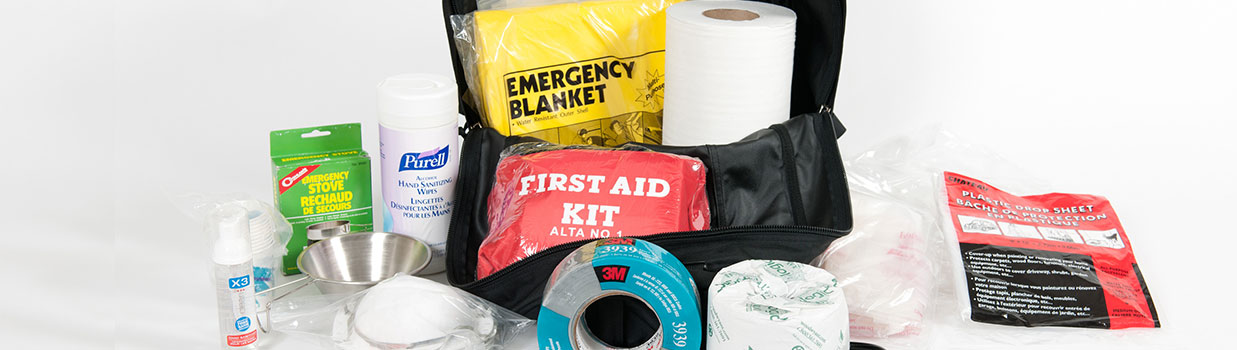
During an emergency, you may need to stay in your home without electricity or water, or evacuate your home for a period of time. Having emergency supplies on hand can help keep you and your household safe.
What to include in your emergency kit
Food and water:
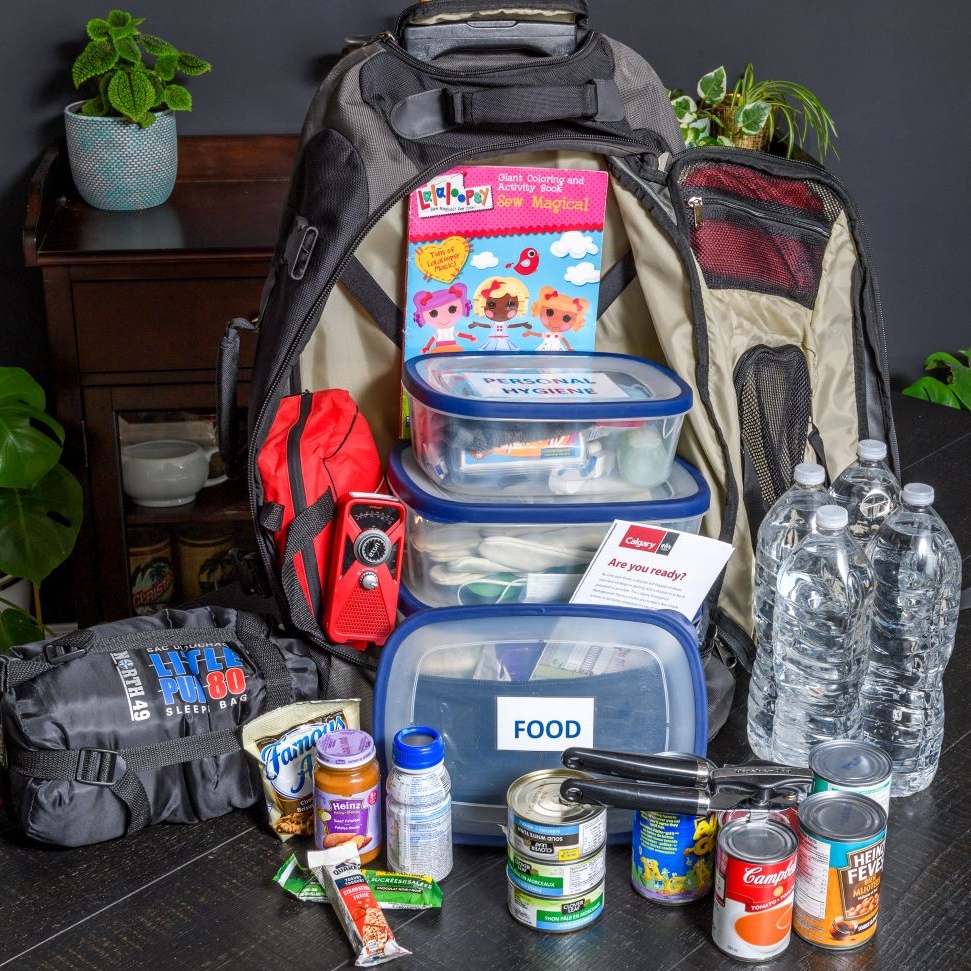
- Four litres of water per person, per day
- Food that requires little or no preparation and won’t spoil, such as canned food, dried food, energy bars, etc.
- Check expiry dates regularly and replace items as needed
First aid kit:
- Gloves, gauze and bandages
- Antiseptic
- Scissors and tweezers
- Non-prescription medications (e.g. pain relievers)
- Instant ice packs
- A survival blanket (if space allows)
Toiletries and personal sanitation items:
- Wipes and towelettes
- Garbage bags
- Toilet paper
- Feminine supplies
- Hand sanitizer
Equipment and other supplies:
- Manual can opener (if your kit contains canned food)
- Flashlight
- Wind-up or battery-powered radio
- Extra batteries
- Phone chargers and a portable battery pack
- Matches or lighter
- Whistle (to signal for help/attract attention)
- Cooking and eating utensils
- Cash (in case debit and credit card machines are down due to a power outage)
Clothing and blankets:
- Warm clothes
- Blankets or sleeping bags
Important documents:
- A list of your emergency contacts (names and contact numbers)
- Copies of important documents such as passports, birth certificates, and insurance policies
Special need items (if applicable):
- Prescription medications
- Infant needs (diapers, formula, bottles, etc)
- Pet needs (food, leash, medication, carrier, etc)
- Comfort or entertainment items for children (e.g. cards, games, activity books, stuffed animals, etc.)
Emergency kit checklist
Print our checklist to help ensure you have everything you need.
Build your emergency kit
How do I store my kit?
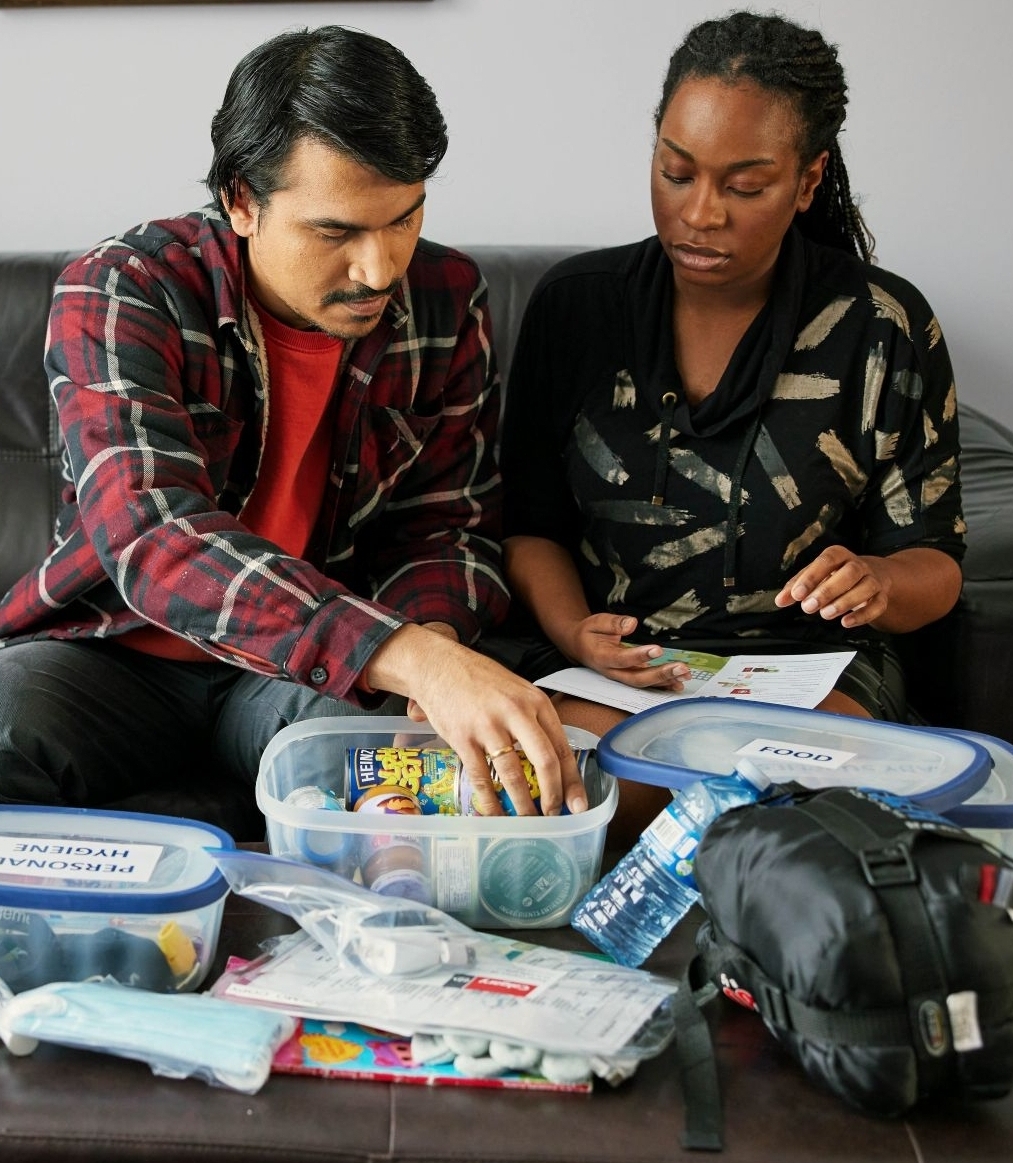
- Use a waterproof container, backpack or wheeled suitcase to store your emergency supplies
- Ensure your kit is portable in case you need to evacuate quickly
- Keep your kit in an accessible location that everyone in your household knows about
How do I maintain my kit?
- Check your kit at least once a year and replace expired food, water, medications, and batteries as needed
- Re-think your needs every year and update your kit as your family’s needs change
Vehicle Emergency Kit
Emergencies can happen on the road and it’s important to have a vehicle emergency kit in case you get stuck or stranded while driving.
Emergency Action Plan
Along with building an emergency kit, creating an Emergency Action Plan can ensure your family has a clear plan for what to do, where to go, and who to contact in an emergency.