

Fats, oils and grease management
Help keep your sewer pipes in good working order, by not putting the wrong things down the pipes and following some preventative maintenance tips in the winter.
In the kitchen
Don’t let fats, oils and grease go down your drain
When fats, oils and grease are poured down the drain and enters the sewer system, these materials cool, harden and stick to the inner walls of sewer pipes. Over time this material builds up, restricting flow, causing odours, and leading to messy, inconvenient and costly clogged pipes, basement flooding and sewer back-ups.
The City spends approximately $3 million every year to repair damage cause by blockages in City infrastructure alone. Repairing sewage infrastructure because of fats, oils and grease damage can also lead to increase wastewater rates for customers.
What can’t be poured down the drain
Fats
Oils
Grease
How to dispose of fats, oils and grease
Here are a few simple steps to follow to keep your drains healthy.
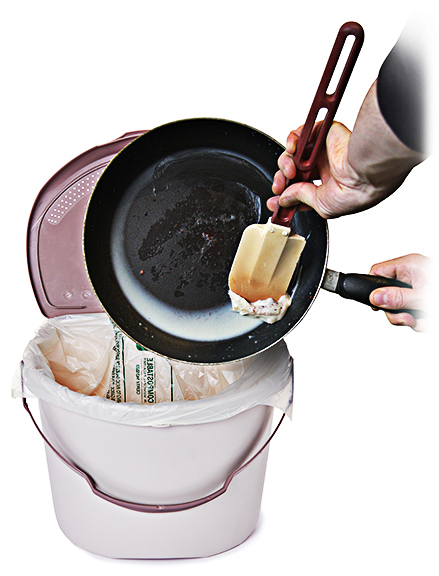
- Wipe cooking equipment and scrape dishes before washing.
- Wipe small amounts of grease with a used paper towel or napkin and place in your kitchen compost bin/green cart.
- Cool larger amounts of grease in a container or bowl until they solidify. Scrape or wipe these materials into your kitchen compost bin/green cart.
- Scrap small amounts of dairy, like sour cream and yogurt into your kitchen compost/green cart.
- Use a sink basket or kitchen strainer to help prevent food residue from going down the drain.
By putting this material into your green cart, you’re also helping us produce high quality compost that will be used at local farms, gardens and in our community.

Myth vs. fact
Myth: Flushing the drain with hot, soapy water when disposing of fats, oils and grease prevents them from hardening in my pipes.
Myth: Flushing the drain with hot, soapy water when disposing of fats, oils and grease prevents them from hardening in my pipes.
Fact: Sewer pipes in the ground are fairly cold, so eventually fats, oils and grease will cool and harden on the walls of the pipe, even when hot water and soap are used. Eventually, it can build up enough to cause blockages.
Myth: If I use a kitchen garburator, it’s okay to put fats, oils and grease down the drain
Fact: Kitchen garburators cut food into smaller pieces, but the wastewater system is designed to manage the flow of wastewater exiting your home, not the scraps and shreds of food leftovers.
When these substances go down the drain, they will still cling to the pipe walls, which over time leads to clogged pipes and blocked sewers.
Myth: It’s okay to put small amounts of grease down the drain.
Fact: Even small amounts of grease add up and over time can turn into big clogs.
Calgary is a big, urban city. Imagine if every neighbour on your street cooking dinner poured a small amount of grease down their drain every evening.
Over time, massive blockages (called fatbergs) form in the wastewater pipe.
Myth: Flushing fats, oils and grease down the toilet is okay.
Fact: All the drains in your home, including the toilet, shower, kitchen sinks, laundry and bathtub are connected to the same sewer pipe so it’s important not to dispose of fats, oils and grease in any of these places.
Frequently asked questions
What should we do with large amounts of cooking oil?
Larger amounts of cooking oil (more than two litres) should be collected in a sealed container labelled “cooking oil”, which can be dropped off at a household hazardous waste drop-off near you.
What should we do about large amounts of liquids (e.g. expired milk, soups)
If you have larger amounts of spoiled liquids (more than two litres) try putting small amounts in your compost every day until you have disposed of the entire amount.
Only put in what can be absorbed by the contents of your green bin (fuller green carts can absorb more liquids than emptier ones).
Excess liquids in the green cart cause problems through the waste collection system, as collection trucks are not designed to carry liquids.
In the future, to help protect your pipes and also get the most out of your food budget, learn about practical tips on how to minimize your food waste.
Stop and think! Not down the sink!
Cooking fats, oils and grease (FOG) cause problems if they are put down the drain.
- Clogged pipes
- Reduced plumbing flow
- Odours
- Sewer backups
- Damage to Calgary's wastewater system
Keep these items out of your sinks, drains or toilets
- Fats: Butter, margarine, dairy, meat, etc.
- Oils: Salad dressings, cooking or deep fryer oils, olive oil, sauces, etc.
- Grease: Chicken, hamburgers, bacon, etc.
How to put fats, oils and grease into your green cart
Keep fats, oils and grease out of your drain by following these easy tips in the kitchen.
- Residential amounts (two litres or less) of fats, oils and grease should be put in the green cart for composting.
- Always wipe cooking equipment and scrape dishes before washing.
- Solidify your oil by mixing it with paper towels, then place it in a certified compostable bag or paper bag and place it in your green cart.
Fats, oils and grease - Report to Calgarians
What Goes Where
To learn more about disposing of fats, oils and grease, visit What Goes Where - Cooking Oil and Grease.

You are required to safely dispose of commercial quantities of fats, oils and grease.