

Background on Rezoning for Housing
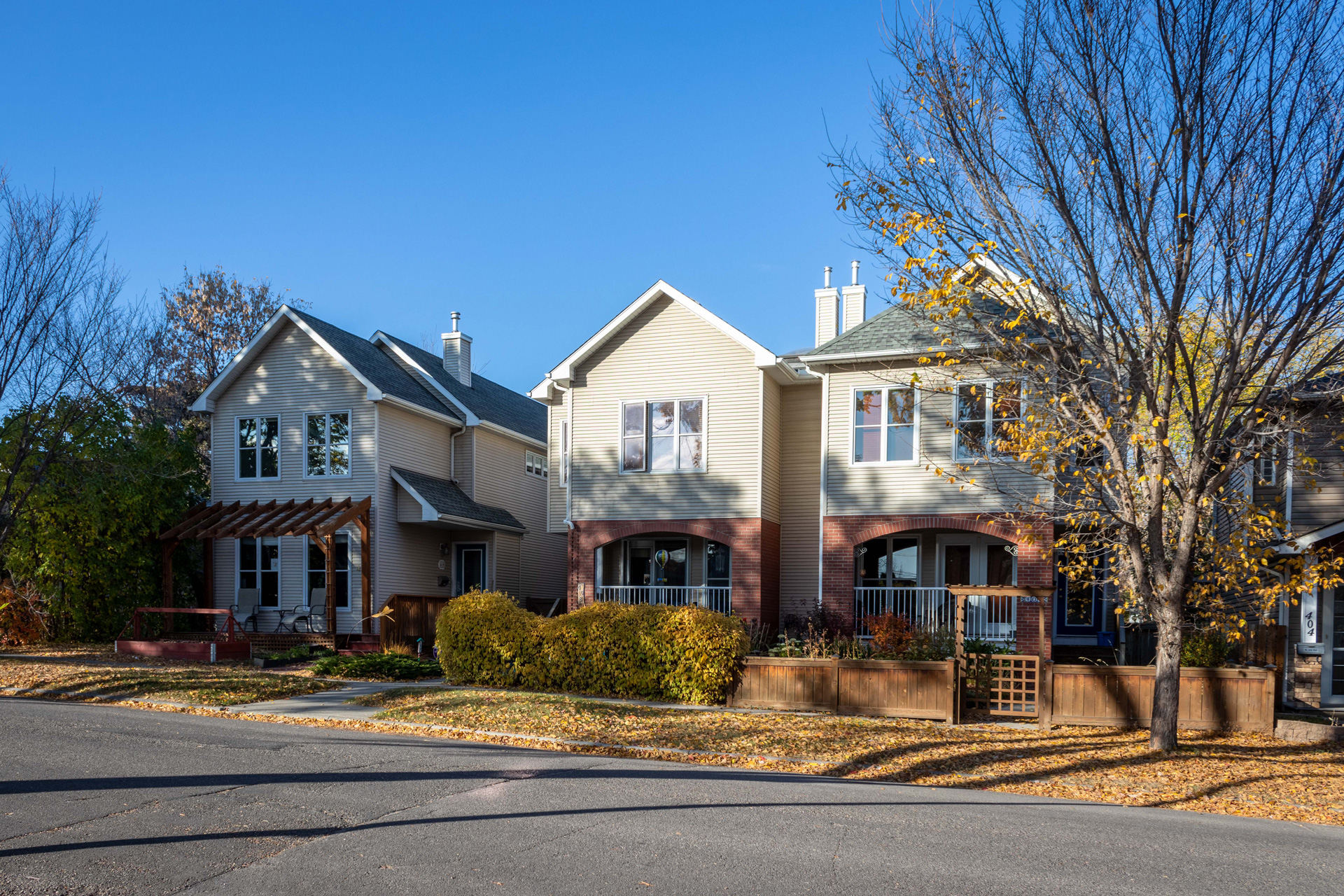
Rezoning for Housing Background information
What does rezoning mean?
One of the actions of the Housing Strategy is to propose citywide rezoning to a base residential district, or zone, to allow for a greater variety of housing in all communities across the city.
|
|
It will be easier, and legal, to build various types of homes in our communities, and this will increase housing options for everyone. |
|
|
People with properties that only allow single or semi-detached homes will have more options. |
|
|
Proposed (re)developments will still be reviewed in detail to ensure they remain compatible with the surrounding community. |
|
|
Parks or green spaces will remain the same, even if they are rezoned. |
|
|
Existing homes can be replaced with new, single-detached homes. |
|
|
Single-family homes will remain. The City will support all permitted development forms. |
|
|
There will still be a development permit process. The landowner will need to apply for (re)development and building permits. |
|
|
Apartment buildings cannot be built on parcels where single-detached homes are today. |
Rezoning and development permits
Rezoning happens when a property owner wishes to develop something besides what is currently allowed under the existing zoning.
Rezoning will streamline the process that property owners must follow if they want to redevelop on their property, eliminating the need for individual and time-consuming rezoning (saving months!).
Council makes the final decision on whether to approve or refuse a rezoning application after a public hearing. If the rezoning is approved by Council, the applicant can submit a development permit application. City Planners then review the application and all aspects of the individual property.
Development and Building Permits may still be required depending on the location of the property. Building permits are always required for new homes. It is these two permits that ensure new buildings meet the rules for height, lot coverage, setbacks, and landscaping, and that the houses are built to meet health and safety requirements.
Learn more about the development permit process.
What was being proposed and zoning details
We are taking action to address the housing crisis. The goal is to increase the supply of housing to help improve affordability and meet demand.
We are implementing five actions outlined in the Home is Here: The City of Calgary’s Housing Strategy 2024-2030 (approved by Council in September 2023):
- Rezone to a new base residential district (zone), Residential – Grade-Oriented (R-CG) or Residential – Low-Density Mixed Housing (R-G) to allow for a greater variety of housing options.
- Rezone to Housing – Grade-Oriented (H-GO) in approved Local Area Plans where appropriate.
- Allow both a secondary suite and a backyard suite on the same property.
- Remove parking requirements for backyard suites.
- Add Contextual Single-Detached Dwelling to R-CG, to ensure development rights are maintained.
Residential – Grade-Oriented Infill (R-CG)
Residential – Grade-Oriented Infill (R-CG) is a land use district/zone used in the developed areas. It allows for a variety of housing forms. This district has contextual rules that take into account the existing styles of homes around the redevelopment site.
- Height: 11 metres
- Types of homes allowed: Single-detached, semi-detached, rowhouse, fourplex and townhome.
- Density: 75 units per hectare.
- Parking: 0.5 stalls/unit minimum.
Rowhouse
Single-detached
Semi-detached
Townhouse
Residential – Low Density Mixed Housing (R-G)
Residential – Low Density Mixed Housing (R-G) is a land use district/zone that allows for a variety of housing forms. R-G parcels are located in areas of a neighbourhood appropriate for a range of low-density housing forms. This district is used in developing (greenfield) areas.
- Height: 12 metres
- Types of homes allowed: Single-detached, semi-detached, and rowhouse.
- Density: Each dwelling unit requires a minimum parcel area of 150 m2 (1 unit/0.015ha).
- Parking: 1 stall per unit (dependent on the type of housing).
Rowhouse
Single-detached
Semi-detached
Housing – Grade Oriented (H-GO) District
Housing Grade Oriented (H-GO) is a district that is appropriate in locations within a community, typically along streets with a focus on accommodating more pedestrians or streets that connect different parts of a community. This district adds the option of higher intensity redevelopment than that of R-CG, but still maintains direct ground level access for all homes.
- Height: 12 metres
- Types of homes allowed: New homes are permitted in this district as long as the proposal meets the rules of the Land Use Bylaw.
- Density: The maximum parcel coverage is 45 - 60%.
- Parking: 0.5 stalls per unit and suite.
Grade Oriented (H-GO)
2024 Council decision
After listening to Calgarians in the largest public hearing in Calgary's history, City Council voted to approve citywide rezoning with amendments. We are currently determining how these actions and amendments will be implemented in the coming months.
Council decision summary
Refer to the Council meeting minutes for information on the approved recommendations, amendments and notices of motions. A summary has been provided below.
Approved Recommendations
Council sessions
Amendments
Download PDF or read below the details of each amendment
1. Applicant Outreach Toolkit; Rowhouse How-to Guide; Expedited Application Timeline; and Planning Liaison Program
In order to create a more robust public engagement process for discretionary uses in the R-CG land use district, direct Administration to:
a. Review and enhance The City of Calgary Applicant Outreach Toolkit in collaboration with interested community associations, residents and industry to improve transparency in community outreach and engagement for development permit applications in R-CG districts, using this process to either create an incentive or requirement for community engagement prior to a formal application submission, with an update to Council by end of 2024 Q3;
b. Create a Rowhouse How-to Guide with input from interested community associations, residents and industry that identifies contextually appropriate design strategies (including but not limited to building height, placement and treatment of windows, air conditioners, waste & recycling bins and landscaping), with an update to Council by end of 2024 Q4;
c. Explore incentives for an expedited application timeline for those applications that demonstrate strong collaboration with community and compliance with process (as per the Outreach Tool and Rowhouse How-to Guide), with an update to Council by end of 2024 Q4; and
d. Determine the necessary resources and any associated funding required to fully implement and sustain a Community Planning Planner Liaison program as previously discussed with some innercity communities and report back to Council no later than the end of 2024 Q3 for any resource and budget requests.
2. Enhance Development Permit Processes & Timelines for Rowhouses and Townhouses
Direct Administration to utilize or leverage an existing community and industry working group to mutually seek efficiencies in the development permit process to expedite development permit timelines, while making townhouse and rowhouse development permits more consistent and standardized in RCG areas to create transparency and predictability for applicants and the public.
3. Updating Local Area Plan Sequencing
Direct Administration to sequence the completion of Local Area Plans in the developed areas of the city by:
a. Identifying the areas with the most demand based on the number of applications; and
b. Prioritizing these areas in the sequencing of future Local Area Plans.
4. Addressing Issues Related to Privacy
Direct Administration to consider changes to the Land Use Bylaw, including provisions related to the current R-G, R-CG and H-GO districts, to address issues related to privacy for adjacent neighbours identified through this report as part of its reporting to Council on the City Building Program.

5. Re-engaging on Updates to Approved Local Area Plans
Direct Administration to review all plans already completed as part of the current Local Area Planning program, and engage with affected communities, to determine whether any amendments to the Local Area Plans are warranted as a result of the proposed rezoning, and report back to Infrastructure and Planning Committee with an interim update no later than 2025 Q1.
6. Infrastructure and Planning Committee Quarterly Briefing
Direct Administration to prepare a quarterly briefing on the implementation of the Rezoning for Housing initiative to Infrastructure and Planning Committee beginning 2025 Q1 including:
a. The effect of Rezoning for Housing on housing supply, including the number of permits issued for new low-density residential units in R-G/R-CG and H-GO districts;
b. Timelines for permit approvals; and
c. A summary of public letters received on development permits enabled by Rezoning for Housing including the overall number in support or opposition and recurring themes of concerns raised.
7. Community Development Committee Annual Report
Direct Administration to report back annually to Community Development Committee starting no later than 2026 Q2 with a report on the Rezoning for Housing Initiative that includes:
a. Impacts of the Rezoning for Housing program at increasing housing supply;
b. Impacts of the Rezoning for Housing program at speeding up permit approval timelines;
c. Community and industry feedback that Administration has received related to Rezoning for Housing; and
d. Recommendations to address issues in the Land Use Bylaw, Local Area Planning program, and permit approvals that have arisen from Rezoning for Housing.
8. Exempting Rowhouses and Townhouses from Development Permit Requirements in Greenfield Communities
Direct Administration, in alignment with Home is Here recommendation 4.B.2, speed up approval processes as appropriate, in order to continue to support the construction of more housing, to bring forward amendments to Land Use Bylaw 1P2007 that exempts free hold/fee simple townhouse and rowhouse developments, that meet the requirements of land use bylaw 1P2007, within newly developing greenfield communities from the need to obtain a development permit and report back to Council by end of 2024 Q3.
9. Evaluating Appropriate Zoning for All City-owned Parks
Direct Administration to review all City-owned parks and evaluate the appropriate district and include a recommendation to rezone with the implementation of the new Zoning Bylaw.
10. Reinstating the Civic Census Program
Direct Administration to research and return to Council before the 2025 Mid-Cycle Budget program with recommendations (including budget and organizational accountability) to resurrect the municipal census program with the intention of conducting
11. Enhancing Development Permit Public Notification Systems
Direct Administration to investigate and report back on options to improve the public notification systems and information provided to users through the City’s planning and development information systems (i.e., DMAP, Calgary.ca, etc.), and report back by 2025 Q4.
12. Including Secondary Suites and Backyard Suites in Density Calculations
a. Include Secondary Suites and Backyard Suites in density calculations in the new Zoning Bylaw, and that minimum density requirements be updated in zones where suites are allowed to reflect this change; and
b. Report back to Council in Q1, 2025 with a scoping report that includes:
i. the overall unit count/density calculation for each community that includes secondary suites and backyard suites as units.
ii. a list of all departments that have calculations based off unit count and the implications of unit counting for all other City departments (fee for service, fee calculations).
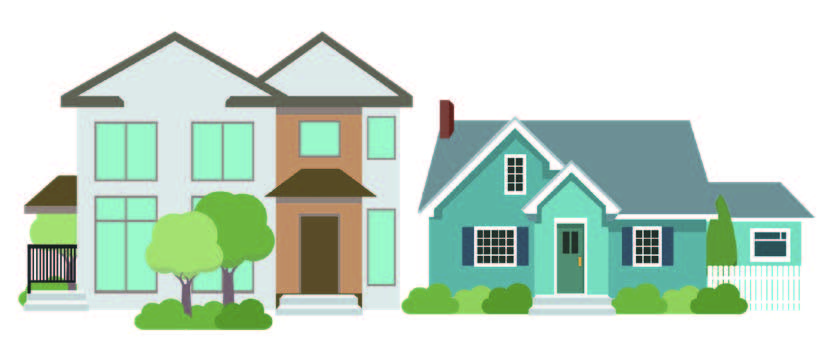
13. Backyard Suite Restrictions for Rowhouses and Townhouses
Delete and replace subsection 153.1(a)(vi) with the following: “Must not be located on the same parcel or bare land unit as either a Rowhouse Building or a Townhouse use.
14. R-CG Parking Requirement of 1.0 stalls or 0.5 stalls
That Council delete Section 1 (o) of Bylaw 21P2024 (Attachment 3) and replace it with the following:
1. Delete subsection 546 and replace with: “546 (1) The minimum number of motor vehicle parking stalls is calculated based on the sum of all units and suites at a rate of 1.0 stalls per unit or suite
2. Notwithstanding subsection (1), the minimum number of motor vehicle parking stalls is calculated based on the sum of all units and suites at a rate of 0.5 stalls per unit or suite for the area listed in Table 2.1. [Table 2.1 simplified: 0.5 stalls in 1960s and older communities]
| Acadia | Downtown West End | Lincoln Park | Rosemont |
| Albert Park/Radisson Heights | Eagle Ridge | Lower Mount Royal | Rosscarrock |
| Altadore | Eau Claire | Manchester | Roxboro |
| Banff Trail | Elbow Park | Maple Ridge | Rutland Park |
| Bankview | Elboya | Marlborough | Scarboro |
| Bayview | Erlton | Mayfair | Shaganappi |
| Bel-aire | Fairview | Maryland Heights | South Calgary |
| Beltline | Forest Heights | Meadowlark Park | Southview |
| Bonavista Downs | Forest Lawn | Mission | Southwood |
| Bowness | Garrison Green | Montgomery | Spruce Cliff |
| Braeside | Garrison Woods | Mount Pleasant | St. Andrews Heights |
| Brentwood | Glamorgan | North Glenmore Park | Sunalta |
| Bridgeland/Riverside | Glenbrook | North Haven | Sunalta West |
| Britannia | Glendale | North Haven Upper | Sunnyside |
| Cambrian Heights | Greenview | Oakridge | Thorncliffe |
| Canyon Meadows | Haysboro | Ogden | Tuxedo Park |
| Capitol Hill | Highland Park | Palliser | University District |
| Charleswood | Highwood | Parkdale | University Heights |
| Chinatown | Hillhurst | Parkhill | Upper Mount Royal |
| Chinook Park | Hounsfield Heights/Briar Hill | Point McKay | Varsity |
| Cliff Bungalow | Huntington Hills | Pump Hill | Vista Heights |
| Collingwood | Inglewood | Queens Park Village | West Hillhurst |
| Crescent Heights | Kelvin Grove | Ramsay | Westgate |
| Dalhousie | Kingsland | Richmond | Willow Park |
| Downtown Commercial Core | Lake Bonavista | Rideau Park | Windsor Park |
| Downtown East Village | Lakeview | Rosedale | Winston Heights/Mountview |
15. Parking Requirements in proximity to LRT and BRT
That with respect to proposed Bylaw 21P2024, the amendment be further amended as follows:
That a new subsection 3 be inserted to the text for Section 546 of Land Use Bylaw 1P2007, as amended, that is proposed in Section 1(o) of proposed Bylaw 21P2024, as follows:
“3. Notwithstanding subsection (1), and (2) the minimum number of motor vehicle parking stalls is calculated based on the sum of all units and suites at a rate of 0.5 stalls per unit or suite for development within 600.0 metres of an existing LRT platform or BRT bus stop."
Motions arising
16. Development Permit Tracking and Reporting of Infrastructure Needs
That Council direct Administration to augment Home is Here recommendation 1.C.13.l by tracking Development Permit applications on RC-G parcels city-wide to identify areas where increased densification requires infrastructure investment (including but not limited to water, roads, and parks), and bring forward the most appropriate funding tool to ensure growth is supported with proper infrastructure, with a report back to Council through Infrastructure and Planning Committee once each year at the end of the year
17. Summary Report on Resource and Budget Implications
That Council direct Administration to bring a summary of the cumulative budget, resource and workplan implications resulting from the final Council amendments made to the original recommendation on CPC2024-0213 to the 2024 June 11 Executive Committee.
18. Advocacy to Reduce the Appeal Period
That Council request that the Mayor write a letter to the Minister of Municipal Affairs on behalf of Council requesting that the development permit appeal period specified in section 686(1)(a) of the Municipal Government Act be shortened from 21 days to 14 days to facilitate the faster release of such permits.
Resources and examples
-
Residential – Grade-Oriented Infill (R-CG)
-
Residential – Low Density Mixed Housing (R-G)
-
Housing Grade Oriented (H-GO)
-
Self-Guided Rowhouse Tour: Altadore/North Glenmore
Zoning examples - Calgary communities
Click to expand images.
2024 Notice of Public Hearing on Planning Matters letter and insert
Arabic
Chinese (Simplified)
Chinese (Traditional)
English
French
Punjabi (Gurmukhi)
Spanish
Why rezoning matters
Calgary has a unique opportunity and the time to take action is now. Our housing market is still relatively affordable compared to other cities across the country. It’s one of the reasons we welcome more and more new Calgarians every year.
Rezoning improves affordability and choice
The research is clear: a variety of abundant housing is fundamental to affordability. Take a look at these case studies on the effects of rezoning on housing supply from around the world.
As with other goods, the balance between housing supply and demand influences price and availability.
A change to our base zoning allows builders to respond to housing demand more efficiently. They won’t need to apply to rezone land when consumer preferences change.
Case study highlights
Supply Shock Versus Demand Shock: The Local Effects of New Housing in Low-Income AreasThe average new building lowers nearby rents by 5 to 7 percent relative to trend, translating into a savings of $100–$159 per month. In addition, we find that new buildings increase low-income in-migration, implying that this improved affordability can foster more integrated, economically diverse neighborhoods that may provide low-income residents with greater economic mobility.
Rezoning adds homes and families to existing communities
Cities are always growing and changing, and our communities need to keep pace!
Most mature communities, especially those built prior to 1980, are declining in population. New homes are also more efficient, which means these communities have the infrastructure (e.g. roads, water and waste management) capacity to handle more types of housing.
Rezoning supports climate action
Enabling more housing supply and options in developed communities will allow more people to benefit from the infrastructure, services, and amenities that already exist in these areas. It will also help us to meet the goals of the Calgary Climate Strategy by:
- Decreasing the distance between trips to work, school, or amenities.
- Creating opportunities to get around the city by walking, biking, or taking transit and reducing the need for trips by automobile.
- Preserving natural grassland and agricultural land on the outskirts of the city.
- Allowing more people to live in new, more efficient homes in already developed areas of the city. New housing can be 35-50% more energy efficient than the older housing it replaces.
More rezoning benefits
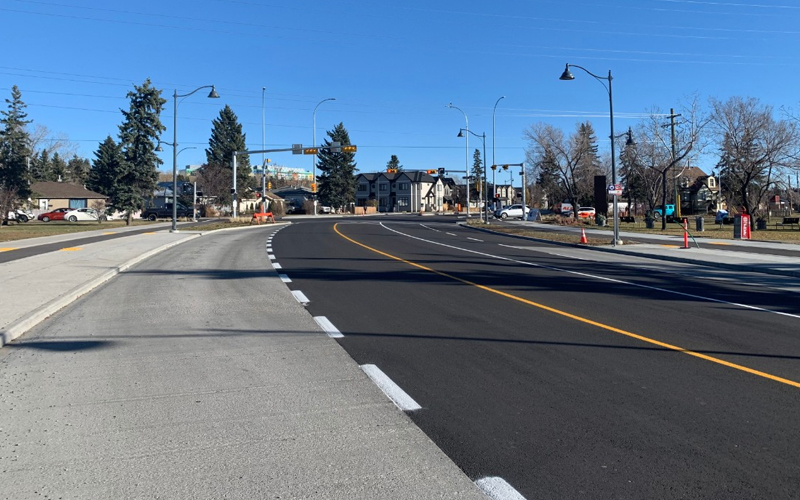
Rezoning helps keep property taxes down as costs to maintain utilities, roads, are shared among a larger population.

Rezoning will improve the walkability of communities as more people can live nearby to amenities like schools, parks, and grocery stores.

More zoning certainty will attract new businesses and people to Calgary.
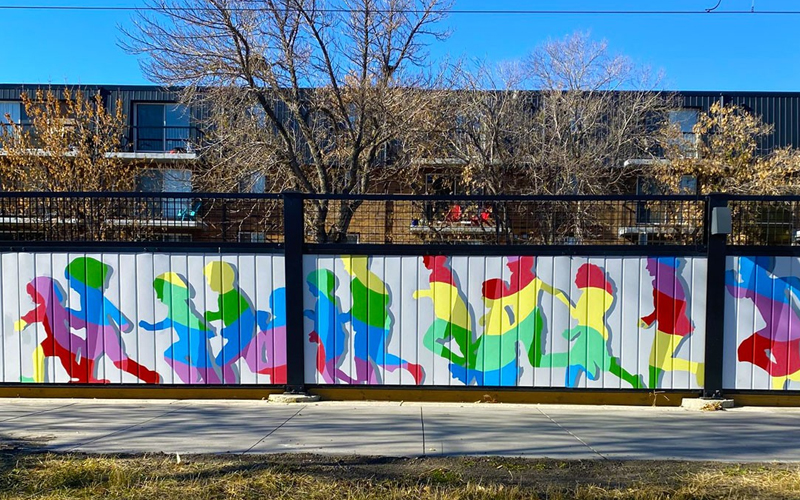
Rezoning will enhance the existing features of established communities and encourage Calgarians to connect with each other.

Access to pathways and increasing transit options encourages low-carbon modes of transportation, supporting a more sustainable, green future for Calgarians.

Rezoning will give everyone the opportunity to live and remain in the same community as their housing needs change over their lifetime.
Frequently asked questions
Does R-CG zoning permit the construction of single-detached homes?
Yes. At the time of development or redevelopment a landowner will decide what type of housing they would like to build. The proposed development would have to comply with all the rules of the Land Use Bylaw. The landowner decides what type of home they want. Further, because the rules of R-CG and R-G have been amended over time, they provide the best rules to develop all forms, including single-detached homes.
Can our infrastructure handle R-CG as a base zoning district?
Yes. Most established area communities, especially those built prior to 1980, are below their historical peak population. Due to declining population in those areas, and higher efficiency houses being built, there is existing infrastructure capacity (roads, transit stops, water and wastewater management, etc.) to handle more types of housing.
What is the relationship between new housing supply and broader housing affordability? In addition, these new homes are expensive, how can they do anything to help housing affordability?
Research shows that adding new homes improves housing affordability for Calgarians. Even when new housing is expensive, adding more homes means fewer people are competing against each other to find a home that fits their needs and budgets.
Allowing a variety of housing types saves Calgarians money because more options mean households only have to pay for what they need for their lifestyle. Adding new homes in an area can reduce rents nearby because older homes need to be priced more competitively to attract households.
Can we not just grow in new communities to address affordability? Why do we need redevelopment?
New communities play a large role in enabling supply and affordability. Nevertheless, the demand for homes in established communities is very high. Restricting different types of housing, including ground-oriented rowhouses and townhouses in established communities, would result in demand outpacing supply and further increases in rents and prices, reducing affordability. Offering people more choice in the type of housing that suits their needs, including proximity to employment and amenities, can reduce emissions by decreasing travel distance and increasing transportation options. Having more housing options also provides Calgarians the opportunity to live and remain in the same community close to friends, family, and the things we know and enjoy, as our housing needs change over our lifetime.
Can we not just grow within the established areas’ brownfield redevelopments (like Currie Barracks), Transit Oriented Developments (TODs) and corridors, and through building conversions (City-owned etc.)?
Consumer choice has strong impacts on city growth. Significant brownfield redevelopment opportunities are limited. TODs and corridors have land value, population and job targets that mean most new homes will be apartments. While apartments are crucial, demand for ground-level housing in Calgary is high.
If a rowhouse is built next to me, will my property value be negatively affected?
Sales data analyzed by Assessment & Tax does not show a loss in value of properties adjacent to new rowhouses. Administration will monitor property values in areas of redevelopment to confirm if changes to property values occur.
When growth occurs in my neighbourhood, how will the additional waste and recycling be managed?
To improve the space for waste and recycling bins, Administration has added requirements to Development Permit applications for:
- Site design and screening;
- More room for on-site waste and recycling bins through greater flexibility in site design; and
- Providing educational resources to applicants.
Bylaw changes now also allow bin-sharing, the use of new technologies, and bin enforcement. Further long-term improvements are also being explored.
Can my neighbourhood manage the additional parking required for increased congestion as a result of growth and redevelopment?
| Yes. On-street parking is for everyone. Where parking congestion is an issue on streets, we take steps to ensure that there is enough parking available by managing the space with permit parking, time restricted parking, or paid parking. We also work with builders to make it easier to use different modes of transportation for future residents, such as providing bicycle parking and building better sidewalks, among other things. |
How will The City evaluate the success of rezoning?
Success includes the ability for more Calgarians to find a stable, quality home that fits their lifestyles, in a community that meets their needs. Administration will monitor and track the number of new units measured against anticipated units, their location, price and effect on city-wide housing costs.
How will rezoning make a difference in the number of new homes being built in new communities and other places in the city? Aren't we already growing everywhere?
Calgary currently has 40 new communities under development on its city edges. In 2023, approximately 12,500 new homes were approved for construction in these communities, marking the highest number of housing starts in at least a decade. Despite this surge in construction activity, the supply of homes still failed to keep pace with the strong demand, leading to rising prices and rents. New communities made up for 76% of the total citywide share of new homes, highlighting how fast these communities are already building. Rezoning initiatives have been proposed to help remove barriers and facilitate the development of low to medium density housing in established communities. This move aims to unlock new housing options and increase supply to meet the needs of Calgarians during a period of rapid growth.
Who pays for the infrastructure connections for an infill development? / What off-site levies does a developer have to pay for an infill development?
All net new increases in units including through infill contribute toward the treatment plant portion of the off-site levy. For linear infrastructure (pipes) the developer/builder historically is directly responsible for local connections. Where development proposals trigger unanticipated local capacity upgrades, traditionally the developer was directly responsible for paying for the upgrade (rather than through a levy). However the City is introducing a process to equitably share that cost through a levy-type mechanism.
What is The City doing to ensure investments (such as amenities and services) are made in existing communities as more homes are added?
The City has developed a strategic approach to guide growth and identify investment needs throughout Calgary. A Citywide Growth Strategy was developed that addresses the three geographic areas of the city: the New Community Growth Strategy, the Industrial Growth Strategy and the Established Area Growth and Change Strategy. This last strategy connects planning, financial, and investment decisions to support our existing communities as they experience growth and change. It supports communities and local businesses so they can be vibrant and successful for decades to come.