

YardSmart rain barrels for outdoor watering
Rain barrels collect rainwater from your roof and store it for later use around your yard and garden beds. Using a rain barrel as a watering container is a simple way to support outdoor watering needs, keep your garden healthy and save money by using less tap water.
Capturing and using rainwater for your yard and garden
A rain barrel acts as a watering container by connecting to your home's downspout and capturing rainwater that would otherwise flow into the storm system. The stored water can be used for outdoor watering, including:
- Gardens
- Lawns
- Trees and shrubs
- Landscaping features
Rain barrels are best suited for manual watering with a hose or watering can rather than automated irrigation systems.

The benefits of using a rain barrel
Using a rain barrel can help you:
-
Support healthy yards, garden beds and landscaping with naturally soft rainwater
-
Help manage runoff and reduce water pooling when the barrel and overflow are set up correctly
-
Reduce water bills and save you money
-
Keep our rivers and creeks healthy by reducing runoff into the stormwater system


Did you know?
During hot, dry weather, outdoor watering can significantly increase household water use. Calgary communities typically see a 20 to 30 per cent increase in water use during the summer because of outdoor watering activities.
Using a rain barrel helps reduce demand on drinking water supplies while providing a free source of water for your yard and garden.
Learn more about keeping Calgary’s creeks and rivers clean at Calgary.ca/stormwater.
-
Explore water-wise yard planning and outdoor water-saving ideas.

Where to buy a rain barrel
Rain barrels are available from a variety of retailers, including:
- Green Calgary
- Garden centres and home improvement stores
- Online retailers
- Community and environmental organizations
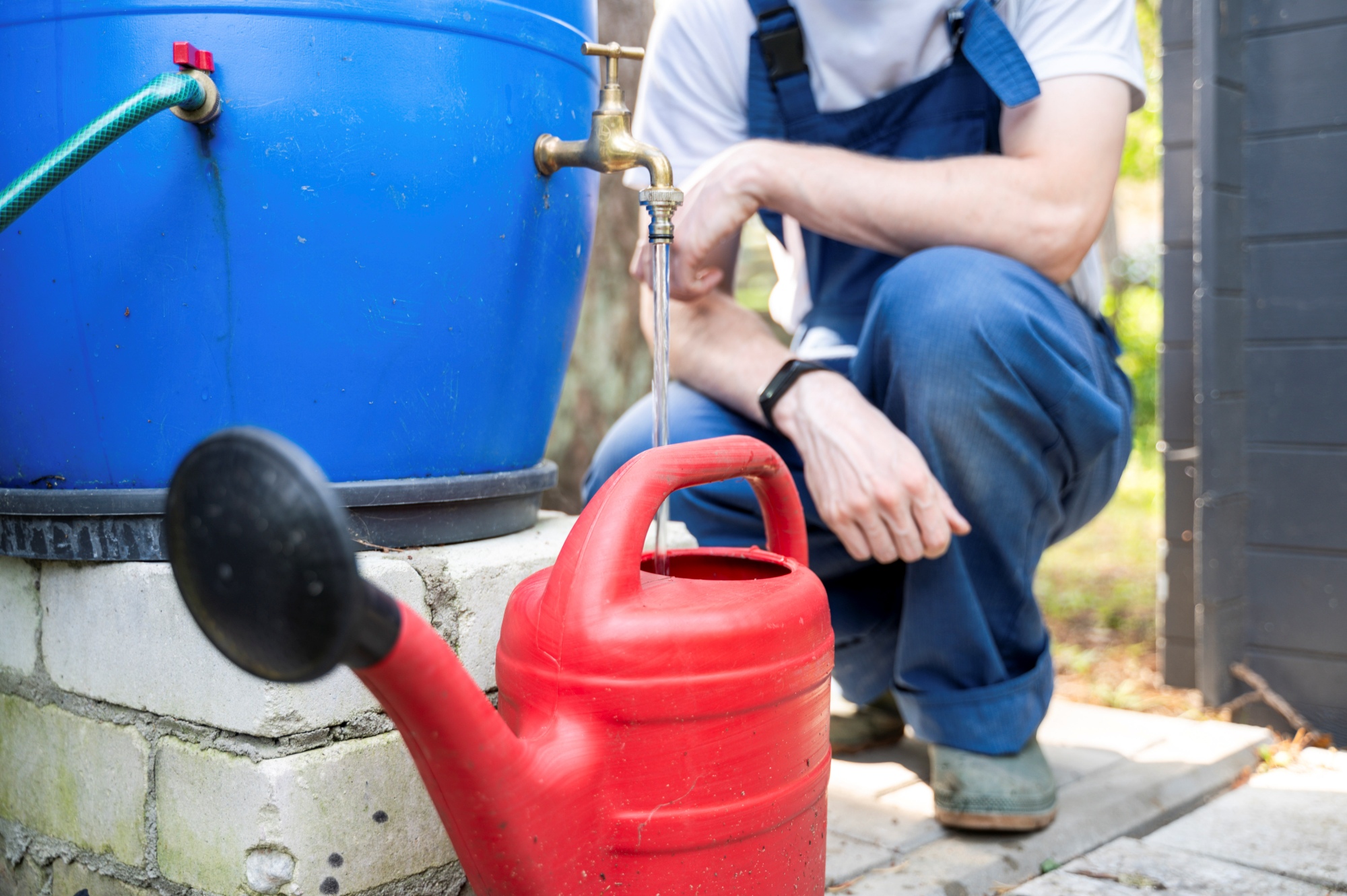
What to look for when buying a rain barrel
Look for a rain barrel that includes:
- A sealed design
- A spigot near the bottom for easy filling of watering cans
- An overflow outlet to help manage excess water
Understanding how water enters and leaves a rain barrel can help you compare different models and features.
Water entry options
Water can enter a rain barrel in two main ways:
- Through a diverter connected to an existing downspout
- Directly from a downspout positioned above the barrel
Water overflow and drainage
Water can leave the barrel in several ways:
- Through a spigot or tap near the bottom of the barrel for everyday use
- Through an overflow outlet that can be connected to a hose to direct excess water away from the barrel, foundation and nearby structures when the barrel is full
- Back through a diverter and into the downspout system
Setting up your rain barrel
Proper setup helps ensure your rain barrel works effectively and safely throughout the outdoor watering season. A basic rain barrel setup includes:
Choose a stable location
Placing the barrel on a stable, level surface near a downspout
Connect the downspout
Cutting or redirecting the downspout so water flows into the barrel
Direct overflow safely
Ensuring the overflow outlet directs excess water away from your foundation
Watch: How to set up your rain barrel
Prefer to watch the process? This short video walks through how to set up a rain barrel step by step.
-
Download detailed setup, maintenance and seasonal care information.
Additional resources
Detailed setup guidance
Choosing a location
Place your rain barrel near a downspout and close to where you plan to use the water. Consider the size and location of the roof connected to the downspout. Larger roof surfaces may collect more rainwater than smaller structures such as detached garages.
Choose a stable, level surface. Consider drainage and ensure water can drain safely. Avoid low-lying areas where water tends to collect. Where possible, choose a location where the surrounding ground slopes away from your home and direct overflow away from building so overflow does not drain toward the foundation. Direct it toward a permeable surface such as a lawn, garden bed or around a tree.
Using a stand
If your rain barrel did not come with a stand, place it on a strong, level base such as concrete blocks. Raising the barrel improves water flow by using gravity and provides enough clearance to place a watering can beneath the spigot.
Connecting the downspout with a diverter
A downspout diverter directs rainwater into the barrel until it fills. Once the barrel is full, excess water is directed back into the downspout.
When using a diverter:
- Direct overflow toward a permeable surface such as a garden bed, lawn or tree, and away from your home's foundation to help prevent water pooling and potential property damage.
- Follow the installation instructions provided by the manufacturer.
- Diverter kits are commonly available at hardware and garden stores.
Connecting a rain barrel without a diverter
Rain barrels can also be connected directly to a downspout. Position the downspout so water can flow directly into the barrel opening.
If overflow could collect near your home's foundation, attach a hose to the overflow outlet and direct excess water toward a garden bed, lawn or tree.
Installing more than one rain barrel
Multiple rain barrels can be used to capture additional rainwater. You can place a barrel at each downspout or connect several barrels together in a series. Many rain barrels can be linked using overflow outlets and hoses to increase storage capacity.
Maximizing water savings
- Use stored rainwater regularly so the barrel has room to refill during future rain events.
- Using more than one rain barrel can help increase water savings during dry periods.
- For downspouts that are not connected to a rain barrel, consider directing runoff toward a rain garden, lawn, tree or garden bed.
Larger rainwater collection options
For larger yards or higher outdoor watering needs, residents may also consider using more than one rain barrel or a larger rainwater harvesting container, where appropriate. Before installing a larger setup, review manufacturer instructions and make sure overflow is directed safely away from buildings and toward a permeable surface such as a garden bed, lawn or tree.
Seasonal rain barrel maintenance
Regular maintenance can help extend the life of your rain barrel and keep it working properly throughout the year.
Spring and summer maintenance
Rain barrels require very little maintenance during the outdoor watering season. To keep your rain barrel functioning properly:
- Check connections and fittings for leaks
- Cover direct downspout openings with a fine mesh screen
- Remove leaves and debris that may clog the spigot
- Rinse the barrel as needed to remove algae growth or sediment buildup
Fall and winter maintenance
Before freezing temperatures arrive:
- Completely drain the barrel
- Store the barrel in a shed, garage or other protected location when possible
- If left outdoors, place the barrel upside down and secure it to prevent movement
- Reconnect any downspouts that were disconnected during installation
- Follow manufacturer winterization instructions if using a diverter
Ensure water is directed safely away from the building foundation. Where a barrel is installed directly below a downspout or with a flexible downspout, restore the original downspout for winter. Where a diverter is used, place it in winter mode according to its instructions. Improperly directed water can collect near your home's foundation and may contribute to soil erosion, foundation damage or basement flooding.
Safe use of collected rainwater
Collected rainwater is not potable and is intended for outdoor use only. It is best used on trees, shrubs, flowers and other non-edible landscape plants. Standing water can also attract mosquitoes if barrels are not properly screened and sealed.
While risks to humans and animals of using collected rainwater are low, it should not be used for:
- drinking
- cooking
- bathing
- watering edible plant parts that will be eaten raw
Using rainwater for food plants
Rain barrels collect water that runs off rooftops. Because every roof is different, the quality of this water can change each time the barrel fills. Rooftop rainwater may contain germs from birds or small animals that can cause illness.
If you choose to use rainwater on food plants, there are ways to lower the risk:
- Water the soil at the base of the plant using a watering can or drip system
- Avoid getting water on the leaves, fruits or vegetables
- Always wash fruits and vegetables well before eating them
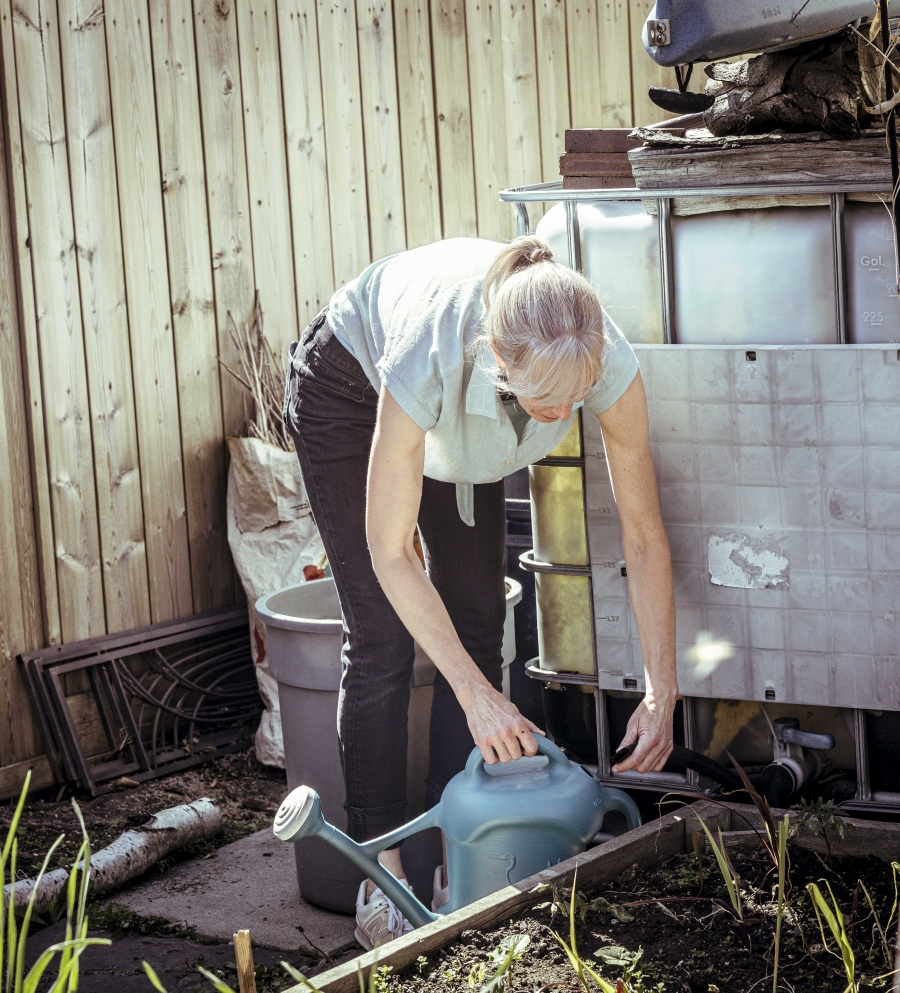
Green Calgary programs and community partnerships
Green Calgary works with community sponsors to support rain barrel programs and education. These partnerships help raise awareness about outdoor water use and practical water‑saving tools for Calgary residents.

