

Calgary Emergency Management Agency (CEMA)
Calgary Emergency Management Agency (CEMA)
-
About CEMA
The Calgary Emergency Management Agency (CEMA) is comprised of more than 50 internal and external services and organizations that come together to prepare for, respond to, and recover from large-scale emergencies and disasters.
-
Emergency Operations Centre (EOC)
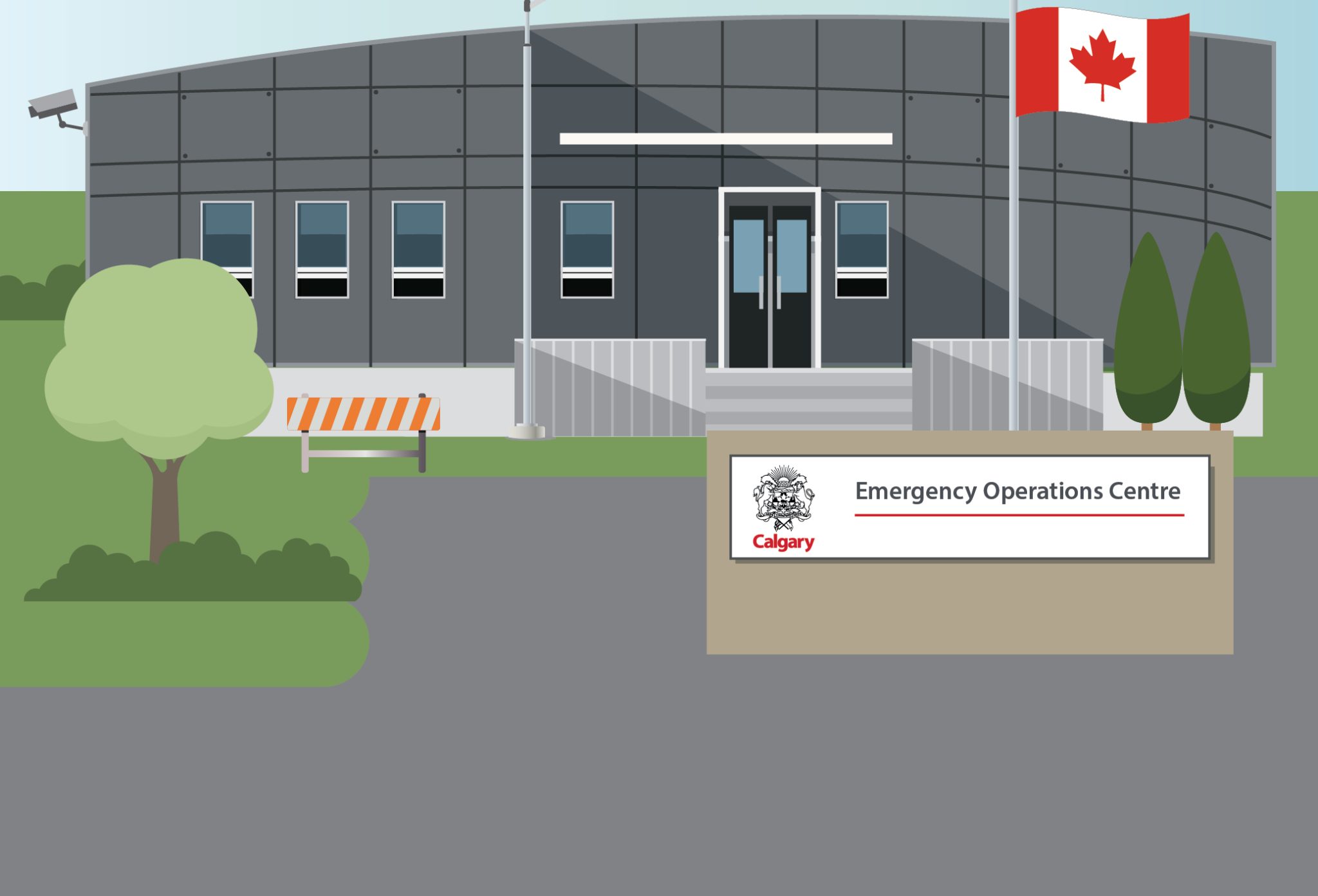
CEMA operates from the Emergency Operations Centre (EOC) in the community of Crescent Heights. During emergencies, the EOC serves as the City’s central hub, where CEMA Agency members come together to plan and coordinate the response.
-
Sue Henry was appointed Chief of CEMA in 2020 and has been with The City since 2001.
Chief Henry has played key leadership roles in the 2013 Southern Alberta floods, wildfires in Chuckegg Creek, Fort McMurray and Slave Lake, the flooding in St. John, and supporting The City’s response to COVID-19.
Municipal Emergency Management Legislation
Emergency Management Act
The Emergency Management Act directs each municipality to establish an emergency management agency. This agency acts as the agent of the local authority in exercising the local authority’s powers and duties under this Act.
Local Authority Emergency Management Regulation (LAEMR)
The Local Authority Emergency Management Regulation (LAEMR) provides direction on emergency management roles and responsibilities and what is required of municipalities to plan and prepare for the safety of their community.
Additional information about our responsibilities and the parameters of the Emergency Management Committee can be found in the City of Calgary Emergency Management Bylaw 25M2002.
Municipal Emergency Plan (MEP)
The Municipal Emergency Plan (MEP) is an all-hazards plan that outlines how The City responds to and recovers from emergencies and disasters affecting Calgary. The MEP is approved by Council, as outlined in the Emergency Management Act.
State of Local Emergency (SOLE)
Under of Alberta’s Emergency Management Act, local governments can declare a State of Local Emergency (SOLE) when a serious situation happens or might happen. This gives them temporary legal powers to take special actions to protect people, property, and the environment.
Examples of extraordinary powers available under section 19 (1) of the Emergency Management Act include:
- Acquire real or personal property (e.g. resources, equipment).
- Conscript people to assist with the emergency.
- Enter land and buildings without a warrant.
- Control or prohibit travel.
- Remove structures, trees, crops.
- Fix prices for essential items, such as food, clothing, fuel, equipment, medical supplies.
- Evacuate people.
Other resources
-
The Disaster Risk Explorer lists the top hazards that can affect Calgarians. It provides a profile of each hazard and key mitigation work being undertaken by The City.
-
The Status of Emergency Preparedness in Calgary Report highlights the actions taken by CEMA to prepare for, respond to & recover from emergencies. It also outlines future priorities to strengthen Calgary’s resilience and reduce risks.
-
The Disaster Risk Report serves as a guiding framework to raise awareness of local risks and support proactive risk reduction measures.
-
The Calgary Emergency Management Agency (CEMA) conducted a community survey in 2025 to gauge the emergency preparedness of Calgarians.
Related pages
-
About CEMA